As a core component of plastic and rubber processing, the extruder screw dictates your production efficiency, product quality, and machine lifespan. Sourcing custom extruder screws from China offers significant cost advantages and access to advanced manufacturing clusters, but it requires a strategic approach to ensure quality. This comprehensive guide, built on industry expertise and technical data, walks you through the entire process from supplier selection to final delivery.
Why Source Custom Extruder Screws from China?
China has established itself as a global powerhouse in plastics machinery manufacturing. For engineers and procurement managers, sourcing from China is no longer just about cost reduction; it is about tapping into mature industrial ecosystems.
The Jintang area in Zhoushan, Zhejiang Province, is widely recognized as the “Capital of Screws in China.” This region alone houses over 500 screw manufacturing enterprises, accounting for approximately 75% of the domestic market share . This massive industrial cluster provides a complete, self-sustaining supply chain encompassing raw material sourcing, advanced heat treatment, precision machining, and specialized surface coatings.
Furthermore, Chinese manufacturers have heavily invested in R&D. Many top-tier suppliers now allocate up to 10% of their revenue to develop advanced technologies, such as laser cladding and bimetallic alloys, significantly enhancing the wear resistance and lifespan of their products .
Step 1: Vetting Suppliers
Not all suppliers are created equal. To ensure you are partnering with a reliable manufacturer, evaluate them based on their Experience, Expertise, Authoritativeness, and Trustworthiness (E-E-A-T).
•Experience: Look for manufacturers with a proven track record in your specific niche. A supplier experienced in PVC pipe extrusion might not be the best fit for compounding highly abrasive fiberglass-reinforced polyamides.
•Expertise: Evaluate their technical capabilities. Do they have an in-house engineering team capable of optimizing screw geometry (L/D ratio, compression ratio, shear elements) based on your polymer’s rheological data?
•Authoritativeness: Check for industry certifications (ISO 9001, CE) and memberships in recognized plastics machinery associations.
•Trustworthiness: Request case studies, client references, and detailed quality control protocols. Reliable suppliers will have transparent inspection processes, often utilizing regional testing centers that provide third-party validation .
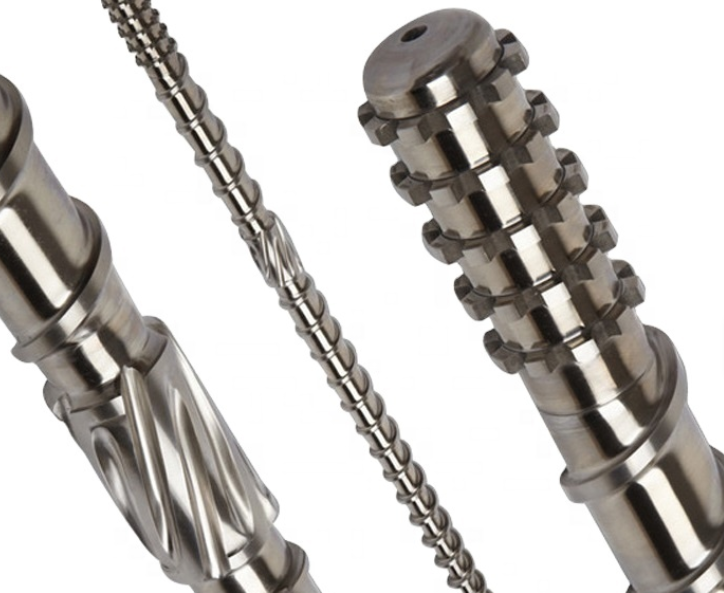
Step 2: Technical Specifications and Material Selection
Clear technical communication is the most critical phase of customization. You must provide precise data regarding your machine (make, model, barrel dimensions), the polymer being processed (MFI, density, additives), and your production goals (throughput, melt temperature).
Base Material Comparison
Selecting the right base steel is fundamental to the screw’s structural integrity. Below is a comparison of the most common base materials used by Chinese manufacturers:
| Material Grade | Standard | Key Characteristics | Best Applications | Relative Cost |
| 38CrMoAlA | GB (China) | Excellent nitriding properties, good core strength. The industry standard for general plastics. | General purpose plastics (PE, PP, PS, ABS) without abrasive fillers. | Low |
| SACM645 | JIS (Japan) | High aluminum content, superior nitriding depth and hardness compared to 38CrMoAlA. | Engineering plastics, mild corrosive environments. | Medium |
| SKD61 (H13) | JIS (Japan) | Hot-work tool steel. Exceptional toughness, high-temperature strength, and wear resistance. | High-temperature processing, abrasive materials (glass fiber < 30%). | High |
Surface Treatment Comparison
To combat wear and corrosion, surface treatments are essential. While nitriding is standard, bimetallic coatings offer significantly longer lifespans for demanding applications .
| Surface Treatment | Process Description | Hardness (HRC) | Wear Resistance | Corrosion Resistance | Typical Lifespan vs. Nitriding |
| Gas Nitriding | Nitrogen diffusion into the steel surface (typically 0.5-0.8mm depth). | 58-62 | Moderate | Low | 1x (Baseline) |
| Hard Chrome Plating | Electroplating a thin layer of chromium. | 60-65 | Moderate | High | 1.5x |
| Bimetallic (Ni/Co Alloy) | Centrifugal casting or PTA welding of a thick alloy layer (1.5-3.0mm). | 58-68 | Excellent | Excellent | 3x to 5x |
| Laser Cladding | Fusing a metallurgical powder to the screw flights using a high-power laser. | 60-70 | Ultimate | Excellent | 5x to 8x |
Expert Tip: If you are processing materials with high glass fiber content (e.g., PA66 + 30% GF) or corrosive additives (e.g., flame retardants), investing in a bimetallic or laser-clad screw is highly recommended. While the initial cost is higher, the extended lifespan and reduced downtime yield a much lower Total Cost of Ownership (TCO).
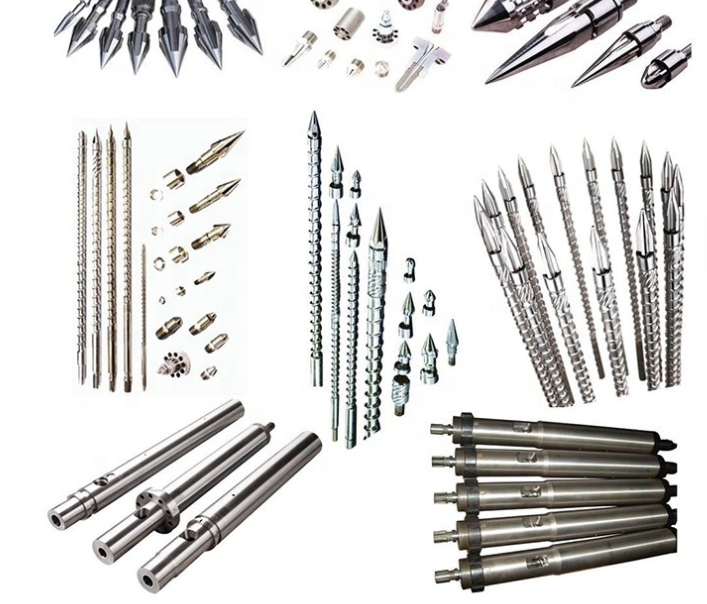
Step 3: Quality Control and Inspection
Never assume quality; verify it. Before the screw leaves the factory in China, insist on a comprehensive inspection report.
1.Dimensional Inspection: Verify the outer diameter, root diameter, flight width, and pitch against the approved CAD drawings. Pay special attention to the straightness and concentricity, as deviations can cause severe barrel wear.
2.Hardness Testing: Request Rockwell hardness (HRC) or Vickers hardness (HV) test results for both the base material and the treated surface.
3.Surface Finish: The surface roughness (Ra) should meet your specifications to prevent polymer stagnation and degradation.
4.Non-Destructive Testing (NDT): For high-torque applications, request ultrasonic or magnetic particle inspection to ensure there are no internal micro-cracks.
Step 4: Logistics, Customs, and Delivery
Shipping heavy, precision-machined steel requires careful planning.
•Packaging: Ensure the supplier uses sturdy, custom-built wooden crates. The screw must be heavily coated in anti-rust oil, wrapped in moisture-barrier film, and securely suspended within the crate to prevent bending during transit.
•Shipping Method: Sea freight (LCL or FCL) is the most economical option but can take 3-6 weeks. Air freight is significantly faster (3-7 days) but exponentially more expensive, usually reserved for emergency replacements.
•Incoterms and Customs: Clearly define the Incoterms (e.g., FOB Shanghai, CIF New York) with your supplier. Work with a reputable customs broker to handle import duties and ensure compliance with your country’s regulations.
Customizing an extruder screw from China is a strategic process that balances cost efficiency with high-performance engineering. By rigorously vetting suppliers, specifying the correct materials and surface treatments, and enforcing strict quality control, you can secure a critical component that maximizes your extrusion line’s productivity and profitability.