Quick answer: yes — a chrome-plated extruder screw can be stripped and re-plated, and re-chroming is in fact a standard step in professional screw rebuilding. The old chrome is chemically stripped off, the screw is repaired and ground back to dimension, and a fresh chrome layer is plated on. Done properly, a rebuilt and re-chromed screw performs like new at a fraction of the cost of a replacement. The practical questions are when it makes sense, how many times it can be done, and what condition the screw needs to be in.
By the BLOOM Engineering Team
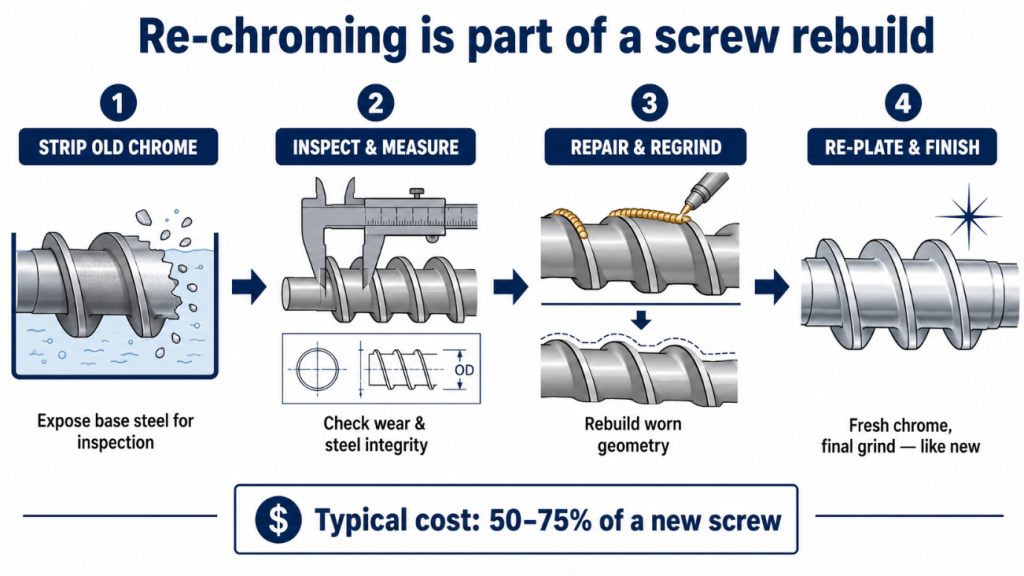
How Re-Chroming Works: The Rebuild Sequence
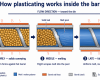
Chrome plating is an electroplated layer — thin (typically 0.03–0.09 mm) and replaceable by design. Re-plating is never done in isolation, though; it is the finishing step of a screw rebuild. The standard professional sequence:
- Strip the old chrome. The existing plating is chemically removed, exposing the base steel for honest inspection and repair.
- Inspect and measure. Flight OD, root wear, and straightness are measured against the original drawing; the steel is checked for structural integrity.
- Repair the worn areas. Worn flight tops are ground down and rebuilt with new hardfacing weld (Colmonoy or similar), then ground back to the original pre-plating dimensions.
- Polish and re-plate. The screw is polished, a fresh hard chrome layer is electroplated on, and the screw gets a final grind and mirror buff to finished spec.
The key insight: the chrome comes off and goes back on as part of restoring the whole screw. You are not just “re-painting” the surface — the rebuild restores the worn geometry underneath, and the new chrome restores the corrosion protection and low-friction finish on top.
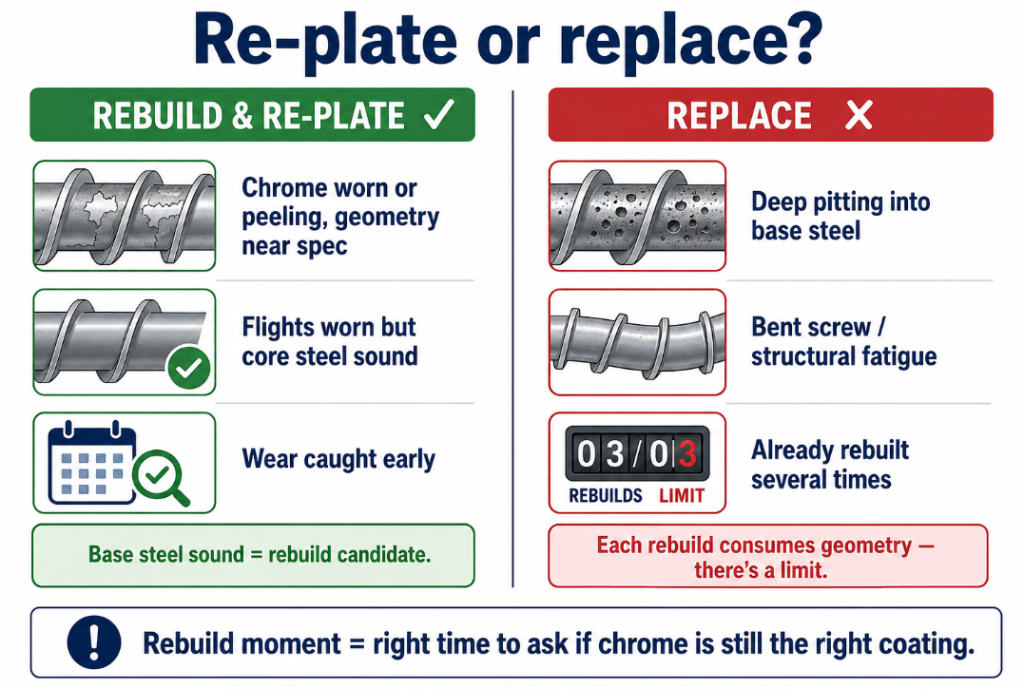
When Re-Plating Makes Sense (and When It Doesn’t)
| Situation | Re-plate / rebuild? |
|---|---|
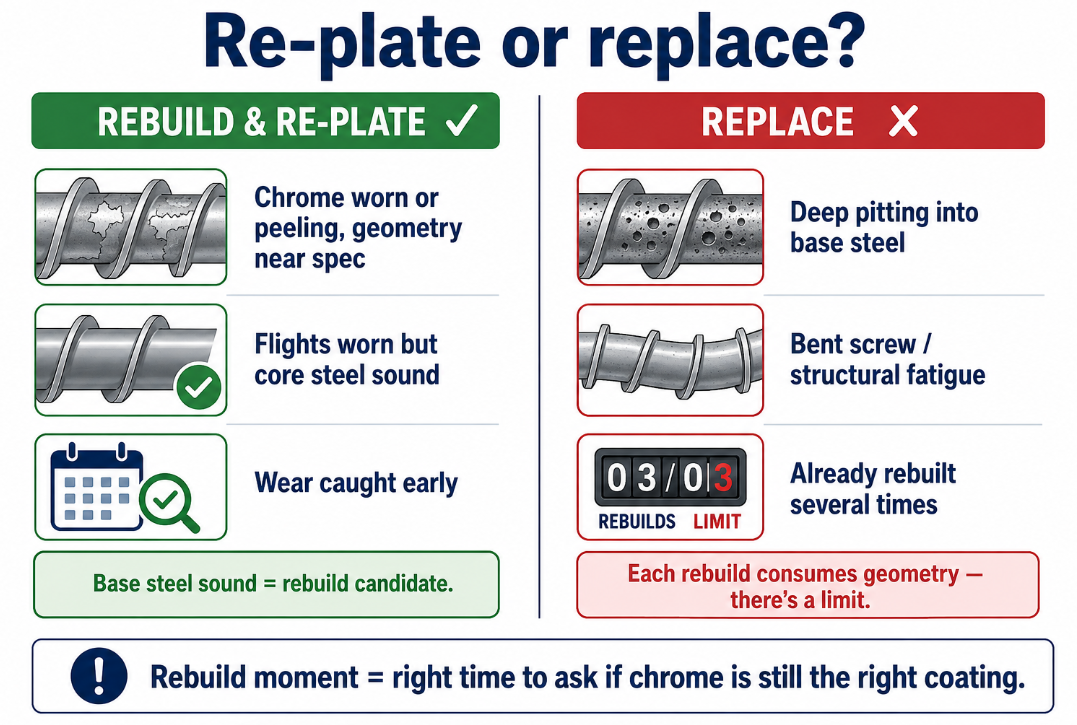
| Chrome worn through or peeling, geometry still close to spec | ✅ Yes — ideal case |
| Flights worn but root and core steel sound | ✅ Yes — rebuild flights, then re-chrome |
| Light corrosion pitting on the chrome | ✅ Usually — strip, repair surface, re-plate |
| Deep corrosion pitting into the base steel | ⚠️ Case-by-case — depends on depth |
| Severe wear, bent screw, or structural fatigue | ❌ Replacement is safer |
| Screw already rebuilt several times | ⚠️ Diminishing returns (see below) |
The economics: a professional rebuild with re-chroming typically costs 50–75% of a new screw, which is why it is worth considering whenever the base steel is still sound. The decision rests on an honest inspection — which is why the strip-and-measure step comes first.
How Many Times Can a Screw Be Re-Plated?
There is a limit, and it comes from the rebuild process rather than the chrome itself. Each rebuild involves grinding and re-welding, which slightly alters the original screw geometry. Industry practice varies: conservative shops caution against rebuilding a screw more than about two times, while others rebuild screws 4–5 times over a screw’s life when wear is caught early and the repairs are modest. The honest answer is that it depends on how much material each rebuild consumes — a screw rebuilt early and lightly can go more rounds than one run deep into wear before every repair.
The practical takeaway: catch wear early. A screw inspected and rebuilt at moderate wear keeps more of its original geometry — and more future rebuilds — than one run until performance collapses. For how to measure and judge wear, see our screw and barrel wear analysis, and for the full repair picture, our extruder screw repair guide.
One Caution: Re-Plating Doesn’t Fix a Wrong Specification
Re-chroming restores what was there — it does not upgrade the protection. If your chrome-plated screw wore out quickly because chrome was the wrong choice for the material (for example, a highly-filled abrasive compound grinding through the thin chrome layer), re-plating the same spec will produce the same short life.
The rebuild moment is exactly the right time to ask whether the surface treatment should change: chrome for corrosion duty, hardfacing or tungsten carbide for abrasive duty, or a combination. A good rebuild shop (or the factory making your replacement) should ask what you process and what the screw failed from before simply re-applying the old spec. The full decision logic — chrome versus nitriding versus hardfacing versus carbide, matched to corrosion or wear — is in our extruder screw coating and surface treatment guide.
The Bottom Line
Yes — chrome-plated extruder screws can be stripped and re-plated, and re-chroming is a normal part of professional screw rebuilding that restores a worn screw to like-new performance at 50–75% of replacement cost. The conditions: the base steel must be sound, each screw has a finite number of rebuilds (caught-early wear preserves more of them), and the rebuild moment is the right time to confirm chrome is still the right coating for what you process — not just to re-apply it by default.
At BLOOM, we manufacture new chrome-plated and hardfaced extruder screws and can advise whether your worn screw is a rebuild candidate or due for replacement — and whether chrome is still the right surface treatment for your material. Send our engineering team a photo and your details on WhatsApp and we will give you an honest read.