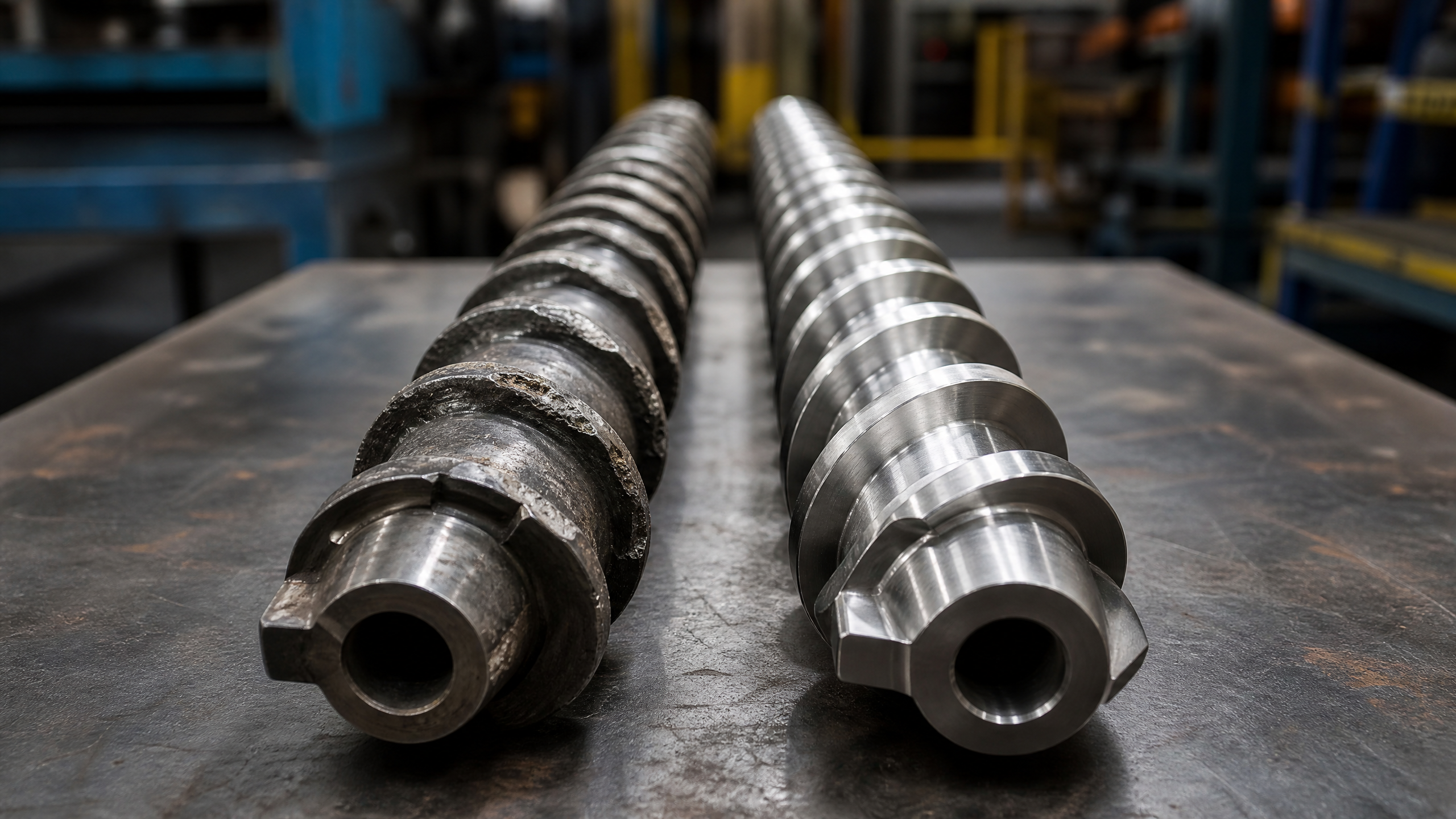
In the high-stakes world of plastic and rubber processing, your extruder screw is the heart of your operation. When it fails or wears down, your entire production line feels the pulse—or lack thereof. At BLOOM, with over 20 years of specialized experience in manufacturing and repairing custom screws, we’ve seen every type of failure imaginable. This guide will walk you through the professional steps to diagnose, repair, and prevent screw damage, ensuring your machinery runs at peak efficiency.
Identifying the Warning Signs: When Does a Screw Need Repair?
Before diving into the “how,” you must understand the “when.” Extruder screws don’t usually fail overnight; they whisper their distress through subtle performance drops. Common symptoms include:
A sudden drop in production volume, often signaling increased clearance between the screw and barrel, is a primary indicator. You might also observe unstable melt pressure, a tell-tale sign of worn flight edges, or visual defects like black spots and un-melted particles in your product, which suggest material stagnation in worn pits.
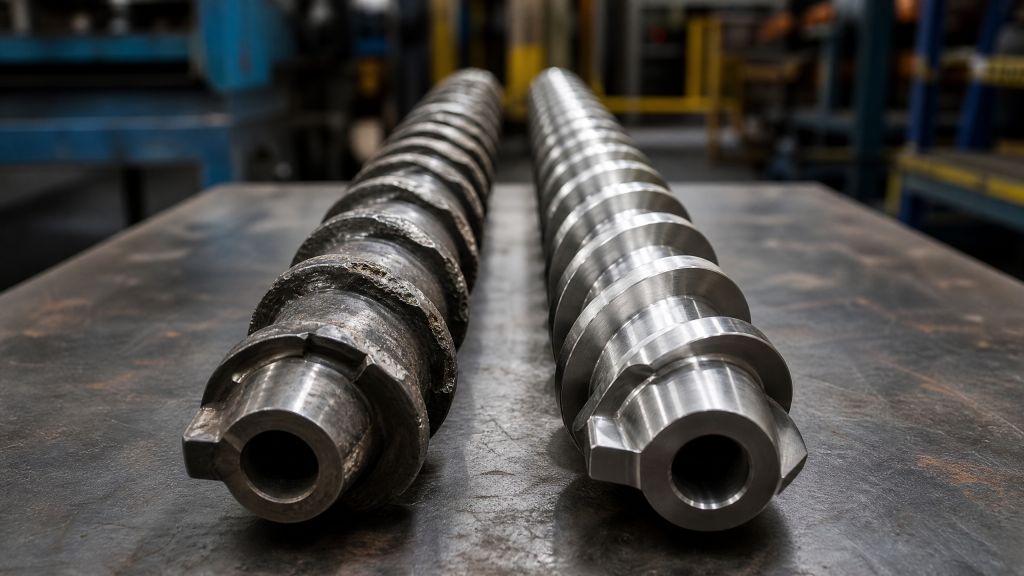
The Professional Repair Process: A Step-by-Step Breakdown
Repairing a precision-engineered component like a twin-screw or single-screw extruder requires more than just a welder; it requires metallurgical expertise.
1. Thorough Cleaning and Inspection
The first step is always a deep clean. We use specialized copper brushes and cleaning compounds to strip away residual polymers. Once clean, we perform a precision measurement using micrometers to map the wear profile.
2. Hardfacing and Re-building (The Core of Restoration)
For screws with worn flight edges, Hardfacing is the gold standard. This involves welding a layer of high-wear-resistant alloy—such as Stellite or Colmonoy—onto the worn surfaces.
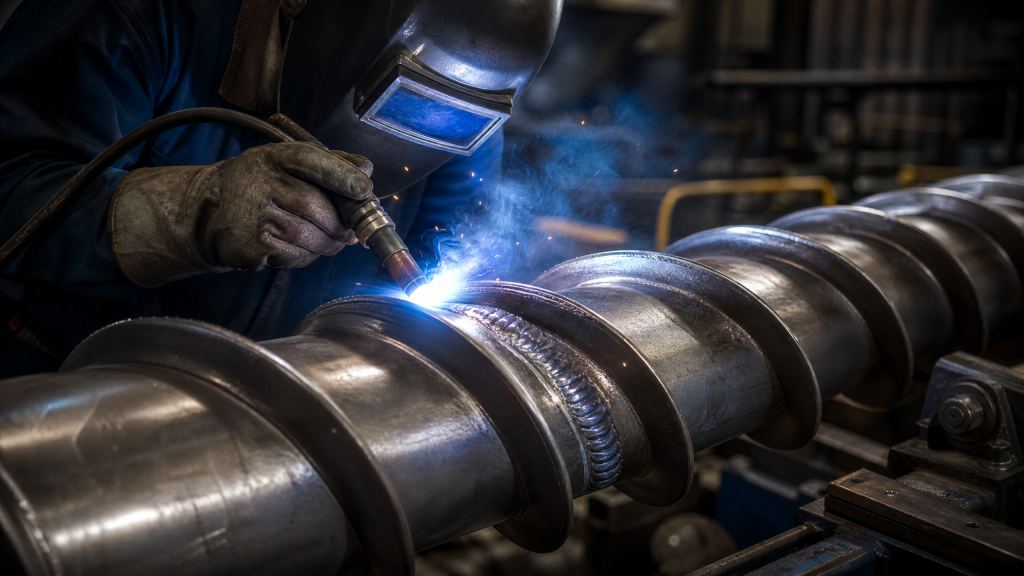
3. Precision Grinding and Advanced Heat Treatment
After welding, the hardfaced screw is oversized. We utilize precision CNC grinding machines to restore the screw to its exact original tolerances—often accurate to within microns. The final, and arguably most critical, phase is heat treatment. For premium base materials like 38CrMoAlA, we implement specialized nitriding processes to maximize surface hardness, fatigue strength, and long-term wear resistance.
Furthermore, when repairing complex bimetallic screws, strict temperature control is maintained throughout the entire heating and cooling cycle. This rigorous thermal management prevents thermal shock and ensures the newly welded alloy bonds seamlessly with the base metal, virtually eliminating the risk of future delamination or micro-cracking in high-stress production environments.
Why Custom Matters: The BLOOM Advantage
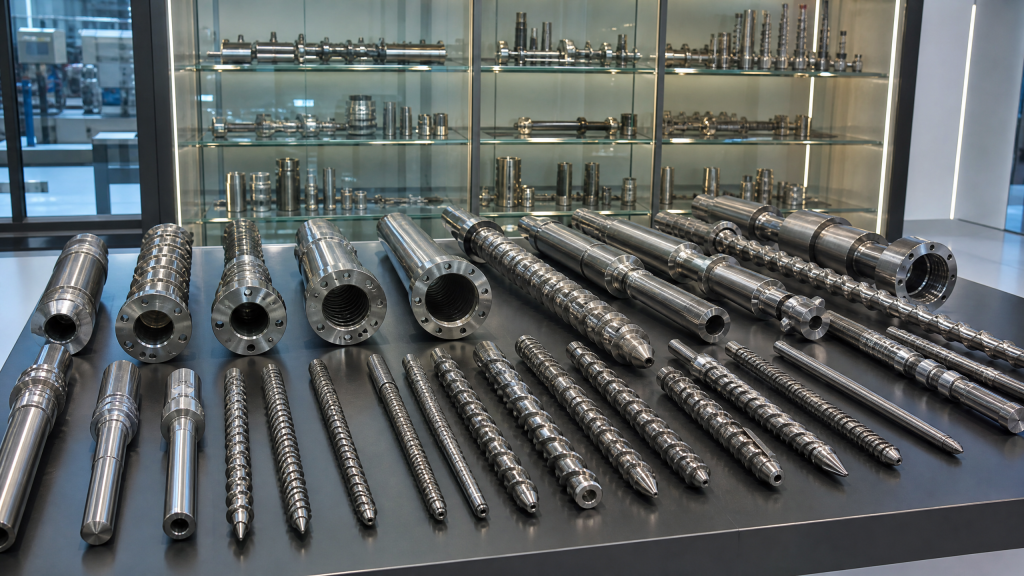
While many shops offer “generic” repairs, BLOOM understands that every application is unique. Whether you are processing abrasive glass-filled polymers or corrosive PVC, the alloy used for repair must match your specific material challenges. Our 20-year legacy in custom manufacturing means we don’t just fix screws; we optimize them for your specific production environment.
Prevention: Keeping Your Screws in Top Shape
The best repair is the one you never have to do. To extend the life of your screws:
Proactive measures are key. Always install magnetic separators to keep harmful metal contaminants out of your feed. Crucially, avoid cold starts by ensuring the barrel is fully heated before initiating rotation. Furthermore, regular monitoring, including quarterly measurements of your screw-to-barrel clearance, can provide early warnings and extend operational life.
Frequently Asked Questions (FAQ)
1. Can a snapped extruder screw be repaired?
While technically possible through specialized welding, a snapped screw often suffers from internal stress. For critical applications, we usually recommend replacing the core shaft to ensure safety and performance.
2. How long does a typical screw repair take?
Depending on the extent of the wear and the type of alloy required, a professional restoration typically takes 5 to 10 business days.
3. Is it cheaper to repair or replace an extruder screw?
For large-diameter or complex twin-screw elements, repair can save up to 50-70% of the cost of a new part. However, for very small, standard screws, replacement might be more cost-effective.
4. What materials are best for hardfacing?
We typically use cobalt-based or nickel-based alloys like Stellite 6 or Colmonoy 56, depending on whether your primary concern is abrasion or corrosion.
5. How do I know if my barrel is also worn?
If a newly repaired screw doesn’t restore your output, the barrel likely has internal wear. We recommend inspecting both components simultaneously.
Ready to Restore Your Production Power?
Don’t let a worn screw bottleneck your business. At BLOOM, we combine two decades of craftsmanship with cutting-edge technology to bring your machinery back to life. Whether you need a rapid repair or a completely custom-engineered screw solution, our experts are ready to help.
About the Author: Kara
Kara is the Chief Executive Officer (CEO) at BLOOM, bringing over 26 years of profound expertise to the plastic and rubber extrusion industry. With decades of hands-on and strategic experience in custom manufacturing and precision component restoration, Kara has guided BLOOM to become a trusted leader in extruder screw and barrel solutions. She is passionate about combining time-tested metallurgical craftsmanship with cutting-edge engineering to help global manufacturers minimize operational downtime and achieve peak production efficiency.
👉 Contact Kara Today for a Free Technical Consultation and Quote!
Experience the precision that only 20 years of expertise can provide.