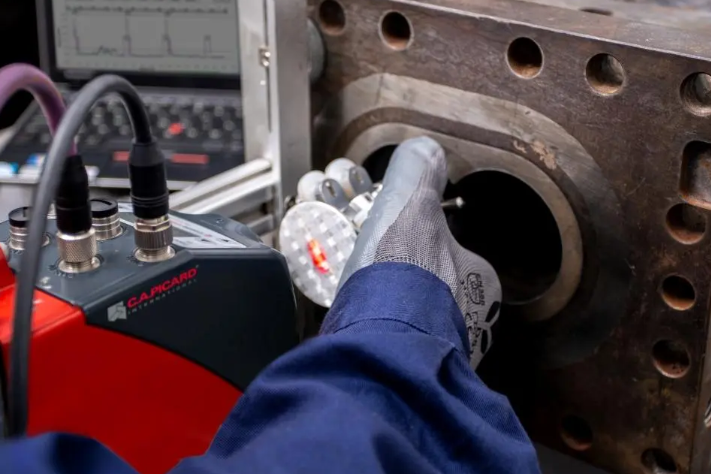
As manufacturers of custom extruder screws and barrels at BLOOM, we see a brutal truth on the factory floor every single day: more extruder barrels are destroyed by impatient operators using the wrong cleaning tools than by actual production wear and tear. When you are pushing high-temp engineering plastics or filled compounds, a clean barrel is non-negotiable. However, once the inner liner—whether it’s a standard nitrided layer or a premium bimetallic alloy—gets even a microscopic scratch from a steel tool, it becomes a permanent trap for polymer degradation, black specks, and cross-contamination.
This guide will walk you through the exact, field-tested procedures to purge and manually clean an extruder barrel to a pristine state, without causing a single scratch.
1. The Anatomy of a Ruined Liner: What Happens When You Scratch the Bore
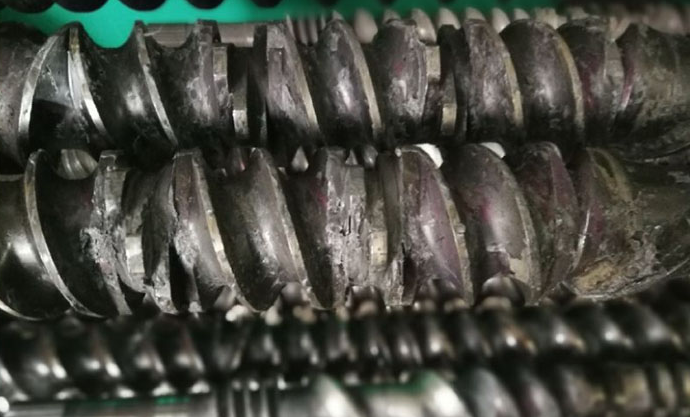
Think of your barrel’s inner bore as a high-speed highway. The moment you introduce a gouge or a scratch, you create a pothole. We call this a “dead spot.”
When molten polymer flows over a scratch, a tiny fraction of the material gets hung up in that crevice. Because it stays trapped there while the rest of the material moves forward, it overbakes, degrades, and carbonizes. Eventually, chunks of this hardened carbon break off and flow into your pristine melt stream, causing immediate quality rejections. Worse, that hard carbon acts like sandpaper against your rotating screw, accelerating wear on both the screw flights and the barrel wall.
Industry Case Study: The $15,000 Steel Brush Mistake A custom compounding facility we consulted for was rushing a color changeover from a dark automotive ABS to a clear medical-grade PC. To speed up the teardown, an operator attached a standard steel wire brush to a power drill to scour the barrel bore.
The Result: The steel bristles created severe micro-scoring along the entire compression zone of their newly installed nitrided barrel. For the next three months, every clear run had unacceptable black carbon specks. They lost over 2,000 lbs of prime resin to scrap. Ultimately, they had to pull the line down and send the barrel out for a complete honing and re-sleeving, costing them upwards of $15,000 in replacement parts and 48 hours of total machine downtime.
2. The “Do Not Touch” List: Safe vs. Destructive Cleaning Tools
The golden rule of extrusion maintenance is simple: Never put a tool inside the barrel that is harder than the barrel lining itself. Carbon steel tools like standard screwdrivers, pry bars, and steel wire brushes have a Rockwell hardness that can easily penetrate a standard nitrided layer. Why are brass and copper king on the extrusion floor? Because they are soft metals. A brass putty knife will bend and deform long before it ever scratches your hardened steel barrel.
Table 1: Safe vs. Destructive Cleaning Tools for Extruders
| Tool Type | Material | Hardness Level | Verdict & Application on Extruder Barrels |
| Putty Knife / Scraper | Brass / Bronze | Soft | SAFE. Use for scraping bulk hot resin off the screw and barrel ends. Will bend before it scratches steel. |
| Wire Brush / Gauze | Copper / Brass | Soft | SAFE. Ideal for scrubbing the inner bore and screw root when paired with stearic acid. |
| Pry Bar / Screwdriver | Carbon Steel | Hard (HRC 40-50) | DANGEROUS. Never use to chip away cold plastic. Guaranteed to gouge the liner. |
| Power Drill Brush | Steel Wire | Hard | CATASTROPHIC. Will quickly strip the nitrided layer and leave deep scoring marks. |
| Purge Compound | Glass-filled / Abrasive | Varies | USE WITH CAUTION. Mechanical purges are great for heavy carbon, but overuse can prematurely wear the barrel. |
3. The Purge Phase: Let the Chemistry Do the Heavy Lifting
Manual scraping should always be your last resort. Before you ever pull a screw, you need to rely on the right purging compound.
Just running natural HDPE through the machine isn’t enough to pull out carbonized material or flush out high-temp resins like PEEK or PEI. You need to choose between chemical purges (which expand and break down molecular bonds of the degraded plastic) or mechanical purges (which physically scrub the walls using soft abrasives).
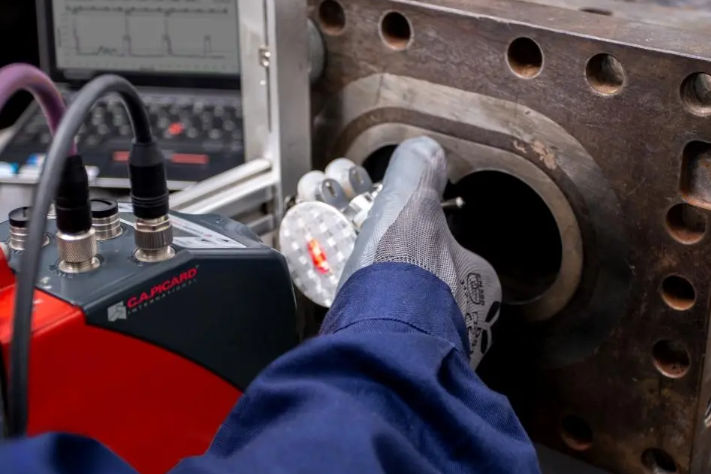
Pack the barrel with the appropriate commercial purging compound, drop the temperature slightly to increase the material’s viscosity (giving it more “bite”), and let it soak. A good purge will push out 90% of the contamination, minimizing the manual labor needed during the teardown.
4. The Teardown Phase: Step-by-Step Manual Cleaning SOP
When the purge isn’t enough, or it’s time for a routine deep clean, follow this Standard Operating Procedure (SOP) strictly:
- Step 1: Pulling Hot. The equipment must be hot to pull the screw and clean the barrel. Cold plastic is like concrete. Emphasize PPE—operators must wear high-heat gloves, long sleeves, and face shields.
- Step 2: The Brass Scrape. Once the screw is out, immediately use a long-handled brass scraper to remove the bulk of the material inside the bore while it’s still molten.
- Step 3: The Stearic Acid Trick. This is an old-school trick that works wonders. Sprinkle stearic acid flakes onto a pure copper gauze pad attached to a long push rod. As you push it into the hot barrel, the acid melts and acts as a mild solvent and lubricant, while the copper gauze gently polishes the bore without scratching it.
- Step 4: The Final Cotton Wipe. Push a tightly bundled, clean, heavy-duty cotton rag through the barrel (using a brass or wooden rod) until it comes out completely clean. Pro tip: If the rag catches or snags on its way through, you have a rough spot or a scratch in your liner.
5. Bimetallic vs. Nitrided Barrels: Does the Cleaning Process Change?
It is crucial to understand that not all barrels react to mechanical stress the same way. While bimetallic alloys (like tungsten carbide blends) are significantly harder and more wear-resistant than standard nitrided steel, they are not invincible to bad habits.
Table 2: Cleaning Tolerance by Barrel Liner Type
Barrel Liner Type | Wear Resistance | Vulnerability During Cleaning | Recommended Cleaning Approach |
| Standard Nitrided (e.g., 38CrMoAl) | Moderate (Surface layer only) | Highly susceptible to scratching and gouging from steel tools. If breached, wear accelerates rapidly. | Strictly brass/copper tools only. Heavy reliance on purging compounds to avoid excessive manual scrubbing. |
| Bimetallic Alloy (e.g., Tungsten Carbide) | Extremely High (Thick alloy layer) | Highly resistant to scratching, but susceptible to chipping or cracking if struck hard by a dropped tool or steel pry bar. | Can handle aggressive mechanical purging compounds better. Still requires brass/copper hand tools to prevent accidental impact chipping. |
6. Building a Preventative Maintenance (PM) Culture
Don’t wait for black specks to show up in your final product to start cleaning. Barrel maintenance needs to be scheduled based on the types of resins you process and your run hours.
Make sure every new operator understands the “Brass Only” rule before they are ever allowed near a torn-down machine. Standardizing your SOPs around cleaning doesn’t just save time; it saves massive capital expenditure.
Conclusion: Elbow Grease is Cheap; Replacement Barrels are Not
Properly cleaning an extruder barrel is dirty, hot, and tedious work. But cutting corners with steel brushes or screwdrivers will ruin your equipment faster than the most abrasive glass-filled polymers.
If an operator has already scored your barrel and the machine is losing throughput or failing to build back-pressure, no amount of copper gauze will fix it. Once the liner is compromised, your best move is to measure the tolerances and plan for a replacement.
If you are experiencing continuous wear issues or need to upgrade your line to handle more aggressive compounds, reach out to our engineering team at BLOOM. We specialize in designing and manufacturing custom bimetallic and nitrided screws and barrels that keep your production running smoothly, shift after shift.