A 3.5-inch extruder screw with just 0.020 inches of wear can cause an average production loss of 9% When you multiply that 9% loss across a 24/7 production schedule over several months, the financial impact dwarfs whatever savings you might have gained by choosing the cheapest extruder parts supplier in China. Sourcing replacement components like screw barrels, dies, and gearboxes from overseas is not merely a purchasing task; it is a critical risk management exercise. While businesses can achieve 20% to 50% cost savings by sourcing custom engineered parts from Chinese manufacturers compared to Western suppliers , these savings evaporate instantly if the parts fail prematurely or cause unexpected downtime.
The challenge for international buyers is no longer finding a supplier—there are thousands listed on B2B platforms—but rather distinguishing a genuine, high-quality manufacturer from a trading company or a substandard workshop. This guide provides a comprehensive, data-backed framework for evaluating an extruder parts supplier in China, ensuring your next order meets strict OEM standards and delivers long-term reliability.
Why China Dominates the Extruder Parts Market
The global extruder market was valued at $9.3 billion in 2021 and is projected to reach $11.5 billion by 2026, growing at a compound annual growth rate (CAGR) of 4.4% . Within this expanding landscape, China has solidified its position as the dominant force in both complete machinery and replacement parts. In 2023, China accounted for 17.1% of the global extrusion machinery market revenue . The country’s manufacturing sector produced approximately 389,900 plastic processing machines in 2023, representing a 4.42% year-over-year increase .
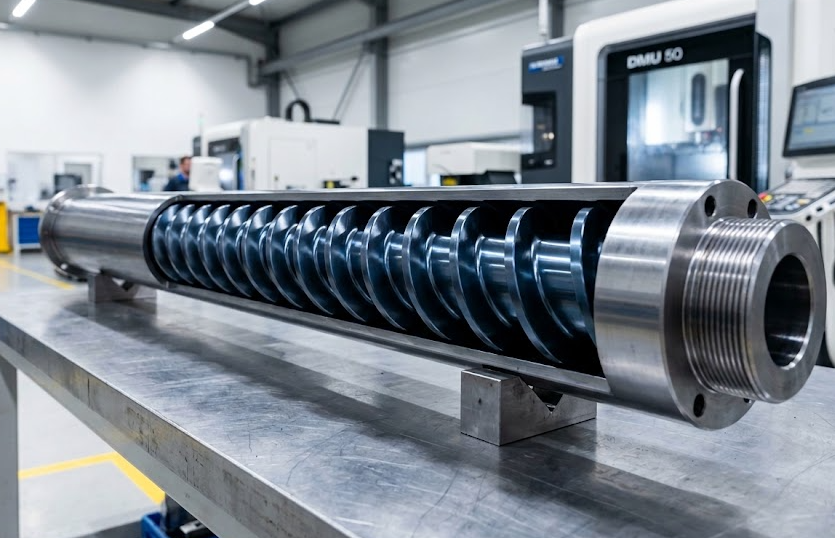
This dominance is driven by a highly integrated supply chain ecosystem. In 2024, China exported an impressive 58,000 plastic extruder units, while importing only about 1,300 units . This massive scale of production has fostered a deep pool of specialized engineering talent and advanced metallurgical capabilities. When you source from a top-tier extruder parts supplier in China, you are tapping into an industrial infrastructure that routinely handles complex requirements for global brands like Coperion, Leistritz, and JSW.
The Zhoushan Advantage: Understanding China’s Manufacturing Cluster
When evaluating potential partners, location matters. In China, the manufacturing of extruder screw barrels is heavily concentrated in specific industrial clusters, with Zhoushan City in Zhejiang Province being the undisputed global hub. Understanding this geographical concentration gives buyers a significant advantage during the vetting process.
A supplier located in or near Zhoushan benefits from immediate access to specialized raw materials, such as 38CrMoAlA and W6Mo5Cr4V2 tool steel, as well as localized heat treatment and bimetallic casting facilities. This clustered supply chain allows for faster lead times and tighter quality control. If a prospective supplier claims to manufacture heavy-duty bimetallic screw barrels but is located in a region known primarily for light consumer goods, this geographical mismatch should prompt further investigation into whether they are actually a trading company outsourcing your order.
6-Step Due Diligence Framework for Vetting a Supplier
Finding a reliable OEM extruder parts supplier requires moving beyond glossy website photos and conducting rigorous due diligence. The following six-step framework is designed to filter out high-risk vendors and identify capable manufacturing partners.
Step 1: Verify Manufacturing Capabilities and Equipment A genuine manufacturer will have substantial capital invested in precision machinery. You must verify that the factory operates advanced CNC milling machines, deep-hole boring machines, and specialized grinding centers. Ask for a live video tour of the facility, specifically requesting to see the equipment used for cutting complex screw geometries.
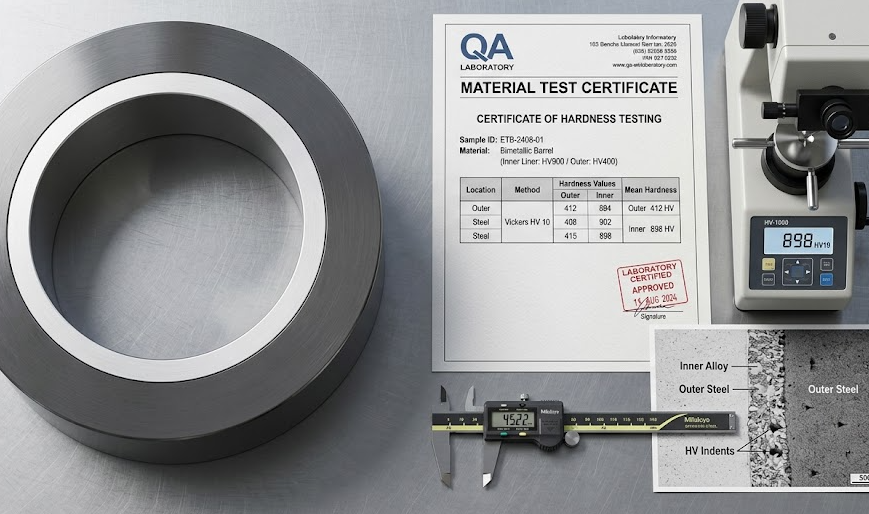
Step 2: Demand Material Traceability The foundation of any durable extruder component is the raw material. High-wear parts require specific alloys. You must insist on material test certificates for every batch of steel used. A reliable supplier will provide documentation proving the chemical composition of the steel matches your specifications before machining begins.
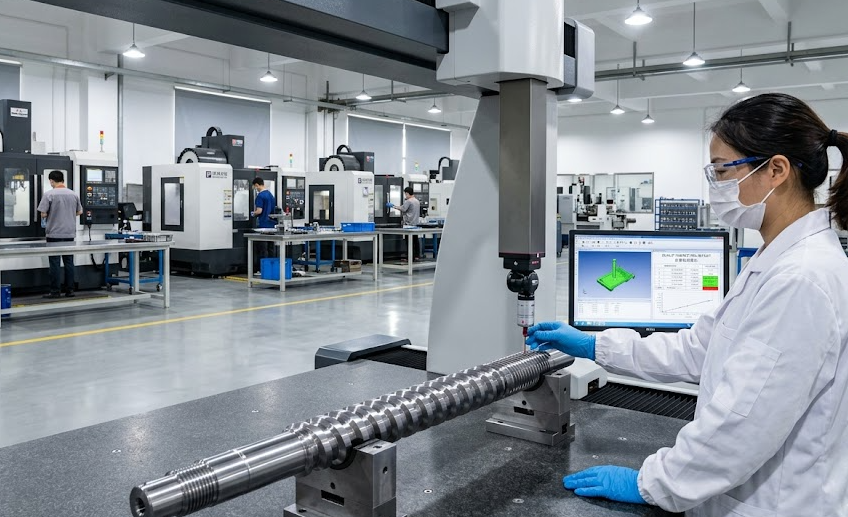
Step 3: Assess Quality Control and Inspection Protocols Quality cannot be inspected into a part at the end of the line; it must be controlled throughout the process. Ask the supplier about their in-process inspection methods. Do they use Coordinate Measuring Machines (CMM) to verify complex profiles? For buyers with strict technical standards, requesting a Production Part Approval Process (PPAP) is highly recommended. While it requires more upfront work, PPAP dramatically reduces quality escapes in production .
Step 4: Evaluate Heat Treatment and Surface Coating Expertise The lifespan of a screw barrel is largely determined by its surface treatment. Whether you require nitriding, bimetallic casting, or specialized hard-facing, the supplier must demonstrate mastery of these processes. Request metallographic reports and hardness test results from previous batches to verify their claims.
Step 5: Check Export Experience and OEM Compatibility An experienced extruder parts supplier in China will understand international shipping standards, including proper anti-rust packaging and wooden crate fumigation. Furthermore, they should have a proven track record of producing parts compatible with major OEM brands, demonstrating their ability to adhere to global tolerance standards.
Step 6: Mandate Third-Party Pre-Shipment Inspections Even with a strong factory quality control team, independent verification is essential. Engaging a third-party inspection company like SGS, TÜV, or Intertek to perform a pre-shipment inspection based on your Acceptable Quality Level (AQL) is a small investment. Typically costing between $300 and $500 per inspection, this step prevents the disaster of receiving a container of non-conforming parts .
Technical Specifications You Must Verify Before Ordering
When dealing with an extruder parts supplier in China, ambiguity is your greatest enemy. Factories manufacture exactly to the drawing provided. If your engineering drawings lack clear tolerances or material specifications, the supplier is forced to guess, which inevitably leads to dimensional errors and costly rework. To ensure you receive high-quality components, you must explicitly define and verify the following technical parameters.
Material and Hardness Standards
The base material and surface treatment dictate the wear resistance and operational lifespan of the screw barrel. For standard applications, the base material is typically 38CrMoAlA or 40Cr forged steel, which should be quenched and tempered to a hardness of HB 260–290.
For the surface treatment, you must specify the exact hardness and depth required. The table below outlines the standard technical requirements you should demand from your supplier.
| Specification | Nitrided Screw Barrel | Bimetallic Screw Barrel |
| Base Material | 38CrMoAlA | 38CrMoAlA or Alloy Steel |
| Surface Hardness | ≥ 950 HV | 1000–1200+ HV |
| Treatment Depth | 0.40–0.70 mm (Barrel) | 1.5–2.5 mm (Alloy Layer) |
| Expected Lifespan | Standard | 2–5× longer than nitrided |
| Best Application | General plastics (PE, PP) | High-wear materials (Glass fiber, PVC) |
Precision and Tolerance Requirements
Dimensional accuracy is non-negotiable. A 10% decrease in the outer diameter of an injection screw can result in a 25% reduction in output. Therefore, your drawings must specify strict geometric tolerances. For the inner bore of the barrel, the surface roughness should be Ra ≤ 1.6 µm, adhering to standards like GB 1184-1996. For the outer diameter of the screw, the roughness must be even finer, typically Ra ≤ 0.8 µm (GB/T1801-1999) . Furthermore, the brittleness of the screw must not exceed Grade 2 to prevent catastrophic failure under high torque.
Red Flags: 5 Warning Signs of an Unreliable Supplier
Even with a solid vetting framework, some suppliers may present themselves well initially but fail to deliver. Watch out for these five red flags during your communication and negotiation process.
- Refusal to Provide Material Certificates: If a supplier hesitates or refuses to provide original mill test certificates for the steel used, walk away immediately. This is a strong indicator they are using substandard or recycled scrap metal.
- Unusually Low Prices: While sourcing from China offers cost advantages, prices that are 30% to 40% below the market average for Zhoushan-based manufacturers usually mean corners are being cut in heat treatment or machining time.
- Vague Answers on Tolerances: If you ask how they measure a specific geometric tolerance and they reply with “we have strict QC” instead of naming the specific measurement tool (e.g., CMM or micrometer), they likely lack the capability to meet your specs.
- No Direct Factory Access: If the contact person cannot arrange a live video call from the factory floor or refuses a third-party audit, you are almost certainly dealing with a middleman trading company.
- Lack of PPAP Understanding: While not every factory uses the Production Part Approval Process, a premium OEM extruder parts supplier should at least understand the concept and be willing to provide dimensional reports and process flow diagrams upon request.
Choosing the right extruder parts supplier in China is a strategic decision that directly impacts your production efficiency and bottom line. By understanding the market dynamics, focusing on established manufacturing clusters like Zhoushan, and rigorously applying a data-driven due diligence framework, you can mitigate the risks associated with overseas sourcing. Remember that a detailed engineering drawing is your most important quality tool, and independent verification through third-party inspections is the ultimate safeguard against receiving non-conforming parts.
When you prioritize technical transparency, material traceability, and proven manufacturing capabilities over the lowest initial price, you transform a risky procurement task into a long-term competitive advantage.
Ready to upgrade your extrusion line with reliable, precision-engineered components? Contact our engineering team today to discuss your specific requirements, submit your drawings for a technical review, and discover how our rigorous quality control process ensures every screw barrel meets your exact standards.