
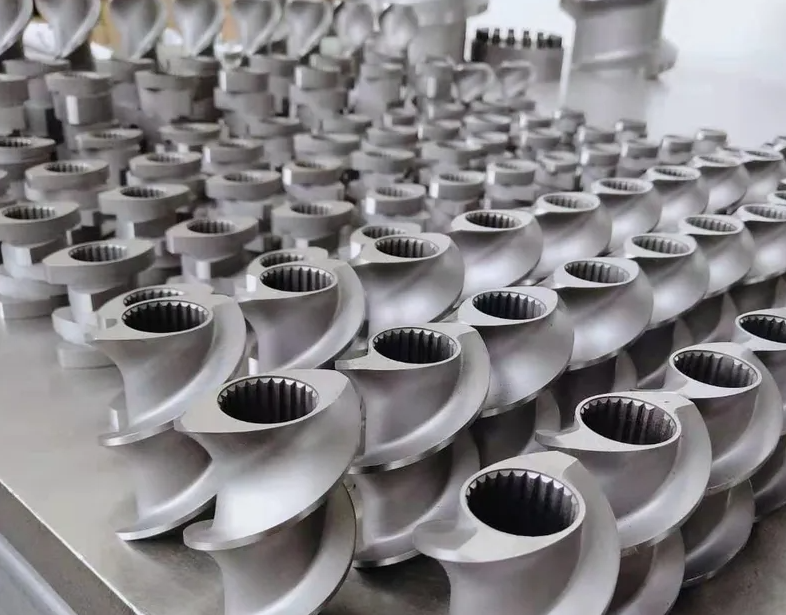
What Are Twin Screw Elements and How Do They Define Extruder Performance?
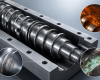
Twin screw elements are the modular functional components mounted on the splined shafts of a co-rotating or counter-rotating twin screw extruder. These elements determine how material is conveyed, melted, mixed, compressed, vented, and pressurized throughout the extrusion process. In practical terms, the screw elements—not merely the extruder barrel or motor—define the actual processing behavior of the machine.
A twin screw extruder is fundamentally a process-engineering system built around configurable screw geometry. By assembling different screw elements in various sequences, engineers can tailor the machine for compounding, reactive extrusion, devolatilization, filler incorporation, polymer blending, food processing, pharmaceutical granulation, or recycling applications. This modularity makes twin screw extrusion one of the most versatile continuous processing technologies in modern manufacturing.
Unlike single screw extruders, where the screw is typically machined as one continuous geometry, twin screw systems use segmented elements installed individually along the shaft. The arrangement of these segments—commonly referred to as the “screw configuration” or “screw profile”—is crucial.
A poorly optimized screw design can result in:
- Unstable pressure and surging
- Insufficient melting
- Polymer degradation due to thermal shear
- Filler agglomeration
- Excessive torque and energy consumption
- Poor color dispersion
- Catastrophic screw or barrel wear
Conversely, a properly engineered screw configuration can dramatically improve throughput, product consistency, mixing quality, and machine efficiency without changing the core extruder hardware.
The Interaction of Micro-Geometry and Macro-Parameters
While screw elements dictate local processing behavior, they must operate in harmony with the extruder’s macroscopic design parameters. Understanding this relationship is critical for system optimization:
- L/D Ratio (Length-to-Diameter): This defines the overall length of the processing section. A higher L/D ratio provides more physical space to sequence multiple unit operations (e.g., melting, multiple side-feeding zones, mixing, and venting) but increases overall residence time.
- Specific Torque: This determines how much mechanical energy the motor and gearbox can deliver to the shafts. High specific torque machines allow for the use of more aggressive kneading elements and deeper-cut conveying flights to handle highly viscous or heavily filled formulations without stalling.
- Fill Factor (Degree of Fill): The local fill volume inside the barrel is directly dictated by the screw pitch and downstream resistance. Effective screw design actively manages the fill factor to ensure complete filling in mixing/pumping zones while maintaining partial filling in venting zones.
Main Types of Twin Screw Elements
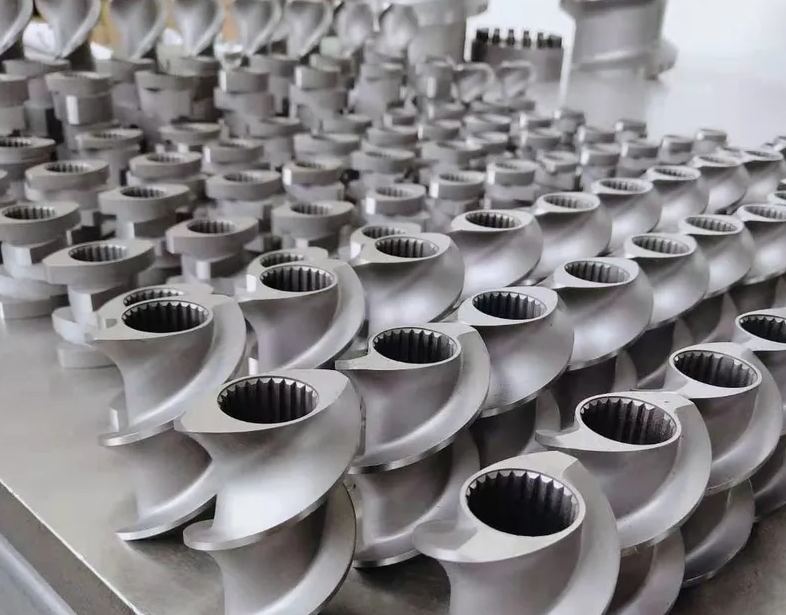
Twin screw elements are divided into several functional categories, each serving a distinct role in the extrusion process.
1. Conveying Elements
Conveying elements transport material forward through the extruder. They generate relatively low shear and are engineered for stable solids conveying and melt transport.
| Property | Typical Function |
| Primary Role | Material transport and pressure generation |
| Shear Intensity | Low |
| Mixing Capability | Limited |
| Residence Time Impact | Low |
| Typical Helix Angles | 15°, 30°, 45°, 60° |
Engineering Insight: The pitch and flight geometry determine conveying efficiency. Larger pitch elements increase throughput but reduce pressure capability, while shorter-pitch elements increase the fill level and pressure buildup. Improper conveying geometry can overload downstream kneading sections, creating excessive melt temperature and torque spikes.
2. Kneading Blocks: The Core Mixing Components
Kneading blocks are the heart of the twin screw extruder’s mixing capability. They generate controlled shear by staggering multiple discs at specific angular offsets.
The stagger angle dramatically dictates processing behavior:
| Stagger Angle | Mixing Intensity | Pressure Effect | Shear Level |
| 30° | Moderate | Forward conveying | Medium |
| 45° | High | Balanced | High |
| 60° | Very high | Reduced conveying | Very high |
| 90° | Maximum | Minimal conveying (neutral) | Extreme |
Lower stagger angles favor throughput and pressure stability, while higher angles maximize residence time and shear. Balancing these variables is a central challenge in screw profile optimization.For how elements come together in a real compounding screw, see our compounding guide.
3. Special Mixing and Process Elements
Modern extrusion relies on specialized geometries beyond standard kneading blocks to handle complex formulations.
- Toothed Mixing Elements: These gear-type elements generate repeated splitting and recombination of the melt flow. They significantly improve distributive mixing (uniform spatial distribution without reducing particle size) while strictly controlling melt temperature rise.
- Reverse Elements: These intentionally create localized back-pressure and increase residence time. While they locally reduce throughput, they are highly effective for sealing melt zones before vacuum venting, reactive extrusion, and homogenization.
- Venting Elements: Specifically engineered with deep flights to expose maximum melt surface area, these elements are critical for degassing moisture, solvents, monomers, and entrapped air. Poor venting configuration often causes bubble formation and unstable strand extrusion.
- This moisture-driven bubble problem is most acute with hygroscopic polymers — PET in particular requires a dedicated vent section to avoid hydrolysis, as covered in our PET extruder screw selection guide.
Distributive vs. Dispersive Mixing
A common misunderstanding in extrusion engineering is treating all mixing as identical. Screw elements perform two fundamentally different types of mixing:
- Distributive Mixing: Improves uniform spatial distribution without breaking down the particles. It relies on flow splitting and recombination. Applications: Color masterbatch, liquid injection, polymer blending.
- Dispersive Mixing: Applies high shear stress to physically break down solid agglomerates or droplets. Applications: Carbon black dispersion, glass fiber wet-out, nano-filler dispersion.
Metallurgy and Wear Resistance
Twin screw elements operate under severe mechanical and tribological conditions involving high torque, abrasive fillers, corrosive additives, and elevated temperatures.
| Material | Typical Application |
| 38CrMoAlA (Nitrided Steel) | General polymer compounding |
| Tool Steel (e.g., D2, M2) | Standard to high wear resistance |
| HIP (Hot Isostatic Pressed) Powder Metallurgy | High-performance compounding with high filler loads |
| Hastelloy Alloys | Corrosive fluoropolymer or halogen systems |
| Tungsten Carbide Coating | Extreme abrasive applications |
The Cost of Wear: In highly filled formulations, abrasive wear gradually alters element geometry. This reduces the self-wiping efficiency, alters screw-to-barrel clearance, and degrades pressure stability long before a catastrophic failure occurs.
Co-Rotating vs. Counter-Rotating Systems
The geometry and functional philosophy of screw elements differ significantly based on the rotational direction of the shafts.
- Co-Rotating Systems: Dominate modern compounding due to their excellent self-wiping action, superior high-shear mixing, and high output capabilities. Most modular screw systems are designed for this platform.
- Counter-Rotating Systems: Emphasize positive displacement, pressure generation, and low shear heating. They are the standard for PVC, profile, and pipe extrusion, where material degradation must be strictly avoided.
Conclusion: Screw Design as a Competitive Advantage
In advanced manufacturing, screw design is always application-specific. There is no universally “best” configuration. For example, a screw profile optimized for glass fiber-reinforced nylon requires low-shear fiber incorporation zones; excessive kneading after fiber feeding causes severe fiber length degradation, destroying the compound’s mechanical properties.
As formulations for biodegradable plastics, EV cable compounds, and battery materials become increasingly complex, screw configuration expertise often matters more than the machine brand. Understanding the interaction between conveying elements, mixing sections, and macroscopic extruder parameters is the true key to achieving stable, high-quality continuous extrusion.

Pingback: Extruder Screws for Solid Electrolyte Membrane Production
Pingback: Screws for Tab Sealant and Pouch Film Lines
Pingback: Thermally Conductive Compounds: Gentler Mixing Wins
Pingback: The Twin Screw Vent Barrel: Volatiles Out, Melt In