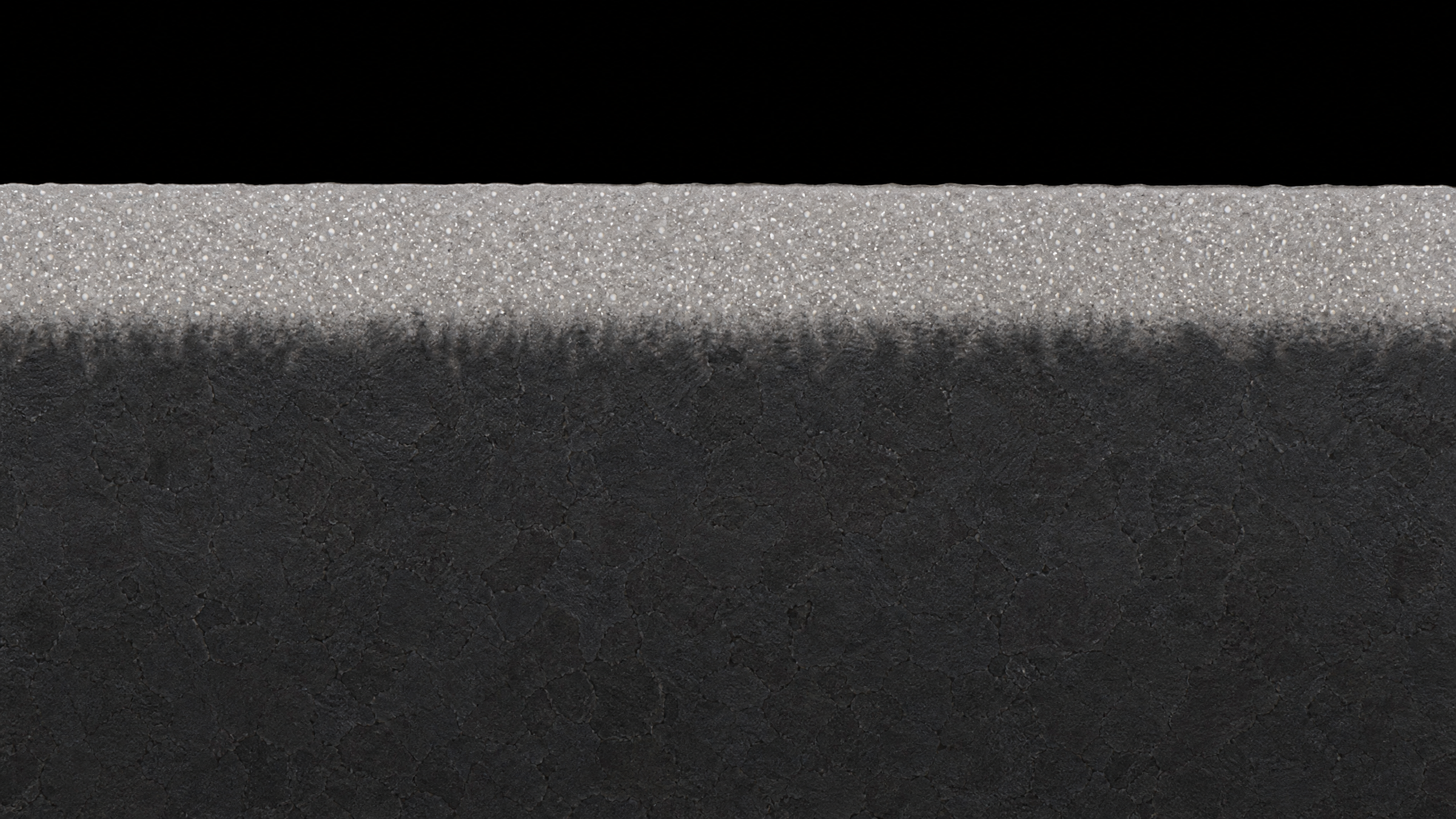
If you are running a plastic extrusion line, you already know that the extruder screw is the beating heart of your operation. It handles immense shear forces, abrasive fillers, and corrosive gases day in and day out. When the screw wears down, your melt quality drops, energy consumption spikes, and downtime eats into your profit margins.
At BLOOM, we have spent the last 20 years customizing and manufacturing premium extruder screws and barrels. Over two decades of hands-on engineering, we have seen every type of wear and failure imaginable. While bimetallic and fully hardened screws have their place, we consistently find that nitrided steel screws—specifically those made from high-grade 38CrMoAl (41CrAlMo7)—offer the best balance of extreme surface hardness, dimensional stability, and cost-effectiveness for the vast majority of extrusion applications.
In this article, we will break down the engineering behind nitrided steel, compare it with other treatments, and share real-world data on why it might be the exact upgrade your production line needs.
The Metallurgy Behind the Magic: What Makes 38CrMoAl Special?
Not all steel can be effectively nitrided. To achieve that glass-hard surface without making the core brittle, you need a specific alloy recipe. The industry standard, and the material we trust at BLOOM, is 38CrMoAl.
The secret lies in its alloying elements:
•Aluminum (Al): This is the game-changer. During the nitriding process, aluminum reacts with nitrogen to form Aluminum Nitride (AlN). These microscopic, ultra-hard particles are dispersed throughout the surface layer, providing exceptional hardness.
•Chromium (Cr): Chromium improves the hardenability of the steel and forms Chromium Nitride (CrN), which significantly boosts both wear and corrosion resistance.
•Molybdenum (Mo): Molybdenum prevents temper brittleness, ensuring that the core of the screw remains tough and resilient even after prolonged exposure to high temperatures.
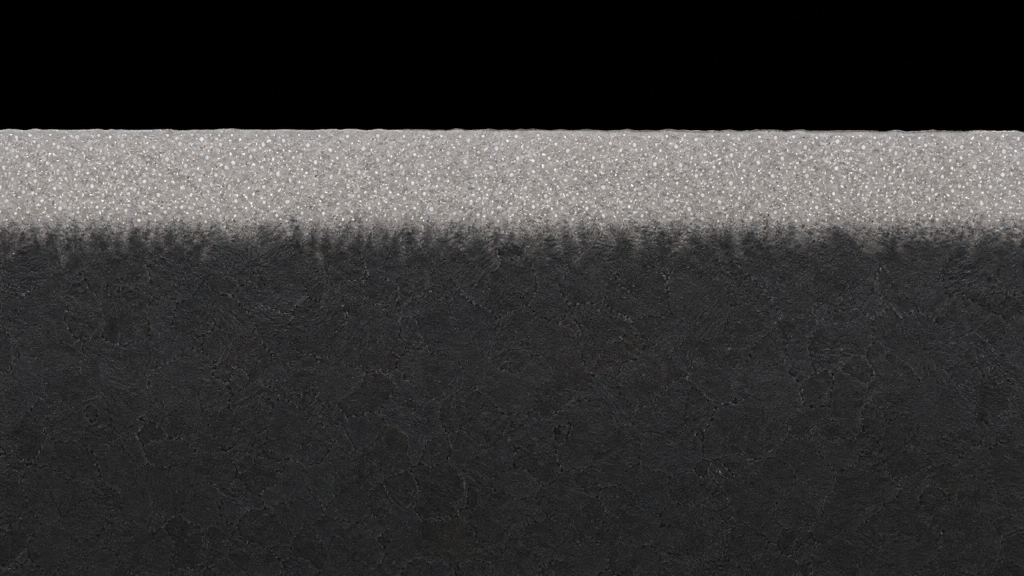
When this specific alloy undergoes the nitriding process—where nitrogen is diffused into the surface at temperatures around 500–580°C—the result is a screw with a surface hardness reaching 900 to 1200 HV (approx. 65-72 HRC).
Plasma Nitriding vs. Gas Nitriding: The BLOOM Advantage
At BLOOM, we do not just rely on traditional methods. We utilize advanced Plasma Nitriding (Ion Nitriding) alongside conventional gas nitriding, depending on the specific geometry and application of your custom screw.
While gas nitriding is excellent for achieving deep case depths on large batches, plasma nitriding offers superior control over the metallurgical structure. By using a high-voltage electrical charge in a vacuum chamber to ionize nitrogen gas, we can completely eliminate the brittle “white layer” (compound layer) that often causes flaking in poorly manufactured screws.
Furthermore, plasma nitriding operates at lower temperatures (as low as 380°C). For long L/D ratio screws, this means thermal distortion is virtually zero. When you order a custom screw from BLOOM, you receive a component with perfect straightness and precise flight clearances, ensuring optimal melt homogenization from day one.
Real-World Performance: Data and Case Studies
It is easy to talk about hardness, but what does it mean on the factory floor? Let us look at the tangible benefits.
1. Superior Wear Resistance Against Abrasives
If you are processing engineering plastics with glass fibers (up to 30%), calcium carbonate, or talc, standard alloy screws will lose their flight lands rapidly. The nitrided layer acts as an impenetrable shield against abrasive wear.
Case Study: PVC Pipe Manufacturer
A client producing rigid PVC pipes was replacing their standard 40Cr screws every 6 months due to severe abrasive wear and corrosive pitting from HCl gas. BLOOM engineered a custom 38CrMoAl plasma-nitrided screw with an optimized compression ratio.
•Result: The BLOOM nitrided screw ran for 18 months before showing a 0.1mm wear on the flight lands—a 300% increase in lifespan.
2. Exceptional Dimensional Stability
Because nitriding is a sub-critical heat treatment (done below the phase transformation temperature of steel), it does not require quenching. No quenching means no thermal shock. The screw maintains its exact machined dimensions. This tight tolerance prevents melt leakage over the flights, which directly translates to lower energy consumption and higher output rates.
3. Anti-Galling and Reduced Friction
The nitrided surface is incredibly smooth and possesses a low coefficient of friction. This prevents polymer melt from adhering to the root of the screw, reducing the risk of material degradation and black specks in your final product. Moreover, it provides excellent anti-galling properties, preventing the screw and barrel from seizing under high pressure.
Performance Comparison Table
| Feature | Standard Alloy Steel (e.g., 40Cr) | BLOOM Nitrided Steel (38CrMoAl) | Bimetallic Coating |
| Surface Hardness | 45-50 HRC | 65-72 HRC | 58-68 HRC |
| Wear Resistance | Low | High | Very High |
| Corrosion Resistance | Poor | Good | Excellent |
| Dimensional Distortion | Moderate (requires quenching) | Extremely Low | Low |
| Cost-Effectiveness | High (Short lifespan) | Excellent (Best ROI) | Moderate (High initial cost) |
Why Choose BLOOM for Your Custom Extruder Screws?
For 20 years, BLOOM has been more than just a machine shop; we are your extrusion partners. We understand that no two production lines are identical. Whether you are extruding delicate medical tubing, high-volume packaging films, or heavy-duty automotive profiles, the screw geometry and metallurgy must be tailored to your specific polymer.
When you work with BLOOM, you get:
•20 Years of Expertise: Decades of data on polymer behavior and screw wear mechanisms.
•Custom Engineering: We design the feed, compression, and metering zones specifically for your resin and output goals.
•In-House Heat Treatment: Strict quality control over the nitriding process ensures consistent hardness and zero brittleness.
•Global Support: From initial consultation to installation advice and maintenance troubleshooting.
Do not let a worn-out screw dictate your production efficiency. Upgrade to a BLOOM custom nitrided screw and experience the difference in melt quality and machine uptime.
Frequently Asked Questions (FAQs)
Q1: How long does a nitrided extruder screw typically last?
The lifespan depends heavily on the material being processed. For general-purpose plastics (PE, PP, ABS) without abrasive fillers, a BLOOM nitrided screw can easily last 3 to 5 years. If you are processing materials with 15-30% glass fiber, you can expect 1 to 2 years of optimal performance.
Q2: Can a nitrided screw process highly corrosive materials like fluoropolymers?
While nitrided 38CrMoAl offers good resistance to mild corrosive gases (like those from PVC), it is not recommended for highly corrosive fluoropolymers (like PTFE or FEP). For those extreme applications, BLOOM recommends our specialized corrosion-resistant bimetallic screws or Hastelloy alloys.
Q3: What happens when the nitrided layer wears off? Can the screw be repaired?
The nitrided layer is typically 0.3mm to 0.6mm deep. Once this layer is worn through, the softer core steel is exposed, and wear accelerates rapidly. Yes, lightly worn screws can be refurbished. At BLOOM, we can grind down the worn surface, rebuild the flights using Plasma Transferred Arc (PTA) welding with hard-facing alloys, and re-nitride the screw to restore its performance.
Q4: Is plasma nitriding always better than gas nitriding?
Not necessarily. Plasma nitriding offers better control over the microstructure (preventing the brittle white layer) and causes less distortion, making it ideal for high-precision or complex screw profiles. However, gas nitriding is highly effective and economical for achieving deep case depths on standard geometries. BLOOM engineers select the best method based on your specific screw design.
Q5: How do I know if I need a custom screw design instead of a standard one?
If you are experiencing issues like unmelted particles, inconsistent output, excessive shear heating (melt temperature too high), or frequent material degradation, your current screw profile likely does not match your polymer. BLOOM’s 20 years of custom design experience allows us to tailor the flight pitch, channel depth, and compression ratio to solve these exact problems.