In the intricate world of plastic extrusion, the screw is the heart of the machine, responsible for conveying, melting, mixing, and homogenizing polymeric materials. The choice of screw material is paramount, directly influencing processing efficiency, product quality, and operational costs. Among the various materials available, nitrided steel stands out as a long-established and widely utilized option. This article delves into the advantages and disadvantages of nitrided steel extruder screws, providing a comprehensive analysis to guide material selection in diverse extrusion applications.
Understanding Nitrided Steel for Extruder Screws
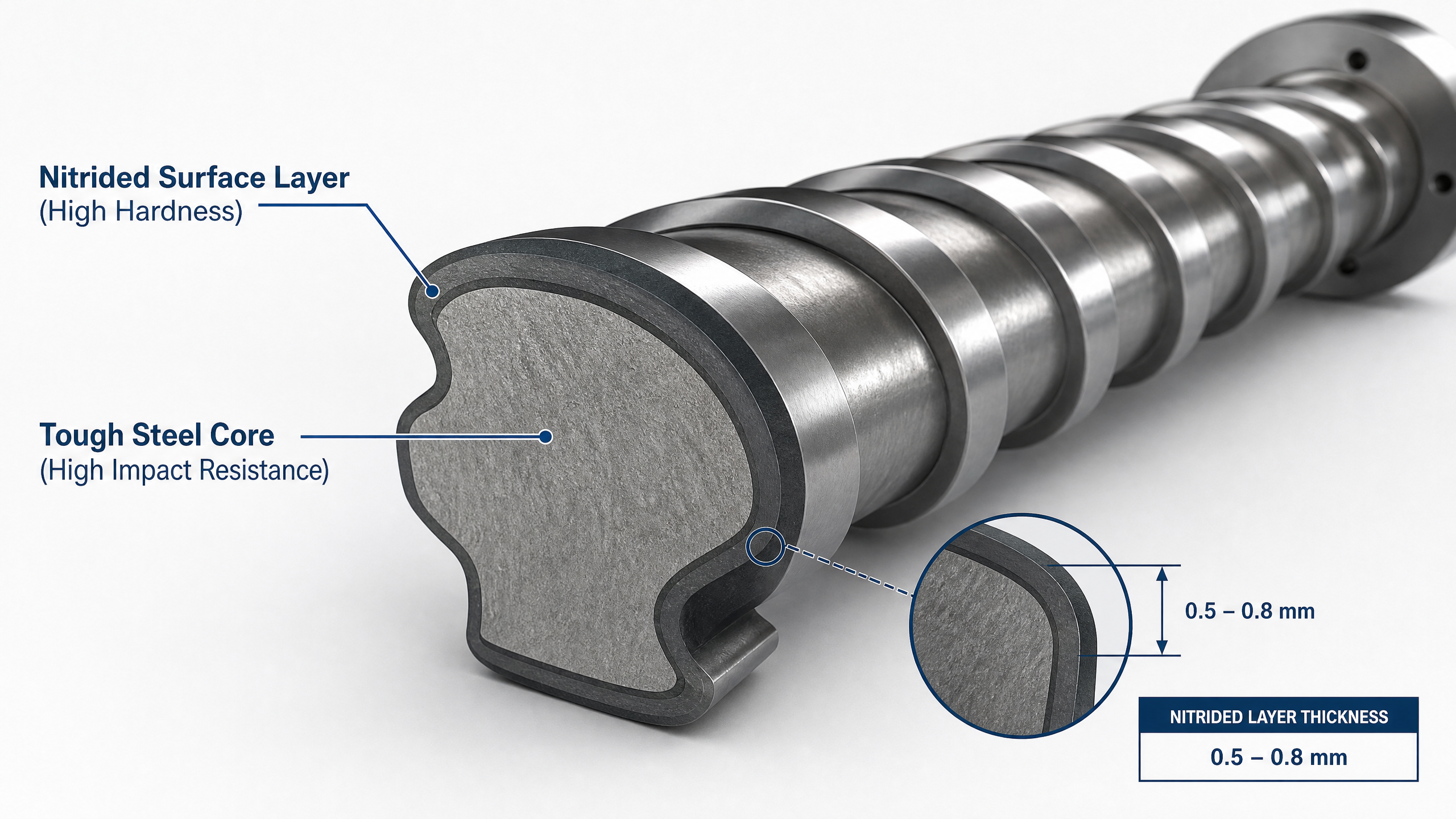
Nitrided steel screws typically employ materials such as 38CrMoAlA (a chromium-molybdenum-aluminum alloy steel). The key to their performance lies in the nitriding process, a thermochemical treatment that diffuses nitrogen into the surface of the steel. This process forms a hard, wear-resistant layer, significantly enhancing the screw’s surface hardness and fatigue strength without compromising the core toughness of the base material.
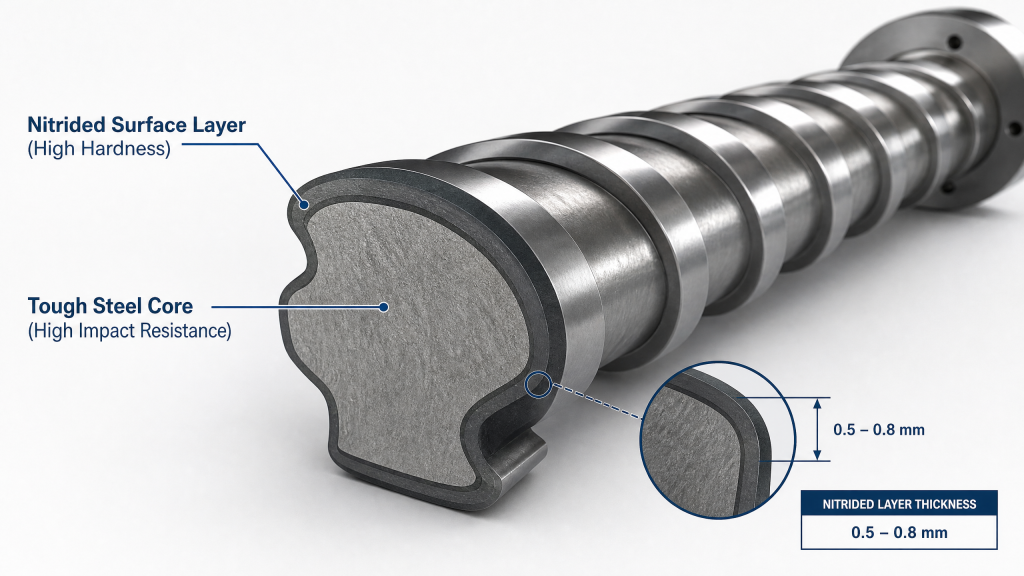
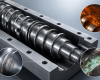
Cross-section of a nitrided steel extruder screw showing the hard surface layer and tough core.
Advantages of Nitrided Steel Extruder Screws
1. Cost-Effectiveness
One of the primary advantages of nitrided steel screws is their lower initial investment compared to more advanced materials like tungsten carbide. This makes them an attractive option for manufacturers operating on tighter budgets or processing less demanding materials. The manufacturing process for nitrided steel is also relatively mature and less complex, contributing to its affordability.
2. Excellent Toughness and Impact Resistance
Unlike brittle ceramic-like materials, nitrided steel retains the inherent toughness of its steel base. This characteristic provides superior impact resistance, making nitrided screws less susceptible to catastrophic failure from accidental metal contamination in the feedstock or sudden torque fluctuations during operation. This robustness can be a critical factor in preventing costly downtime and equipment damage.
3. Versatility for General-Purpose Plastics
Nitrided steel screws are highly versatile and perform exceptionally well with a wide range of general-purpose, non-abrasive plastics such as Polypropylene (PP), Polyethylene (PE), Acrylonitrile Butadiene Styrene (ABS), and Polystyrene (PS). For these materials, the wear and corrosion demands are moderate, and the properties of nitrided steel are more than adequate to ensure a long and efficient service life.
4. Ease of Manufacturing and Repair
The machining and heat treatment processes for nitrided steel are well-understood and widely available. This translates to shorter lead times for manufacturing new screws and easier, more cost-effective repair or refurbishment options when wear eventually occurs. Minor surface damage can often be re-nitrided or polished, extending the screw’s operational life.
Disadvantages of Nitrided Steel Extruder Screws
1. Limited Wear Resistance in Abrasive Environments
The primary limitation of nitrided steel emerges when processing highly abrasive materials. Plastics containing high percentages of glass fibers, carbon fibers, mineral fillers (e.g., talc, calcium carbonate), or ceramic powders can rapidly erode the nitrided layer. This leads to premature wear, reduced screw efficiency, inconsistent product quality, and frequent screw replacement. For instance, when processing glass-reinforced PA66, a nitrided screw might only last approximately 3 months before significant performance degradation occurs .
2. Limited Corrosion Resistance
While nitrided steel offers some improvement over untreated steel, its corrosion resistance is generally insufficient for highly corrosive polymers. Materials like Polyvinyl Chloride (PVC) that release corrosive gases (e.g., HCl) during processing, or fluoropolymers, can quickly degrade the nitrided layer and the underlying steel. This necessitates more frequent replacement and can lead to contamination of the extruded product.
3. Shorter Lifespan with Filled and Corrosive Materials
As highlighted above, the combination of abrasive fillers and corrosive environments drastically reduces the operational lifespan of nitrided steel screws. This can lead to increased maintenance costs, significant production downtime, and a negative impact on overall productivity. In such scenarios, the initial cost savings of nitrided steel are quickly offset by higher operational expenses.
Comparative Analysis: Nitrided Steel vs. Tungsten Carbide
To further illustrate the positioning of nitrided steel, a comparison with tungsten carbide, a premium material for extreme applications, is beneficial. Tungsten carbide can be applied as a coating (bimetallic screws) or used for solid screws.
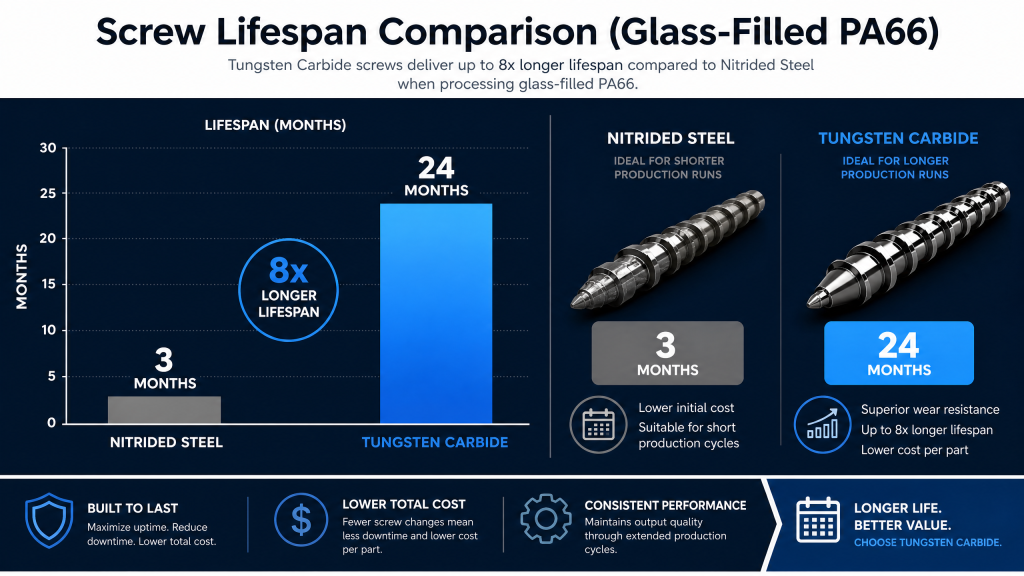
Lifespan comparison between Nitrided Steel and Tungsten Carbide screws in abrasive conditions.
| Feature | Nitrided Steel (e.g., 38CrMoAlA) | Tungsten Carbide (Coated/Solid) |
| Surface Hardness | HV 900-1050 (approx. HRC 55-60) | HRC 60-65+ (Extremely High) |
| Wear Resistance | Good for non-abrasive materials | Exceptional (5-10x nitrided steel) |
| Corrosion Resistance | Moderate | Excellent |
| Toughness/Impact | High (less prone to brittle fracture) | Low (brittle, susceptible to chipping/breakage) |
| Manufacturing Cost | Low | High (2x-10x nitrided steel) |
| Typical Lifespan (Glass-filled PA66) | ~3 months | ~24 months |
| Primary Application | General-purpose, non-abrasive polymers | Highly abrasive, corrosive, or high-precision polymers |
Case Study: Processing Glass-Reinforced PA66
Consider a scenario involving the extrusion of glass-reinforced PA66, a material known for its high abrasiveness. A manufacturer initially uses a standard nitrided steel screw. After approximately 3 months, the screw shows significant wear, leading to reduced output, inconsistent melt quality, and increased scrap rates. The screw needs to be replaced, incurring material costs, labor for replacement, and substantial production downtime.
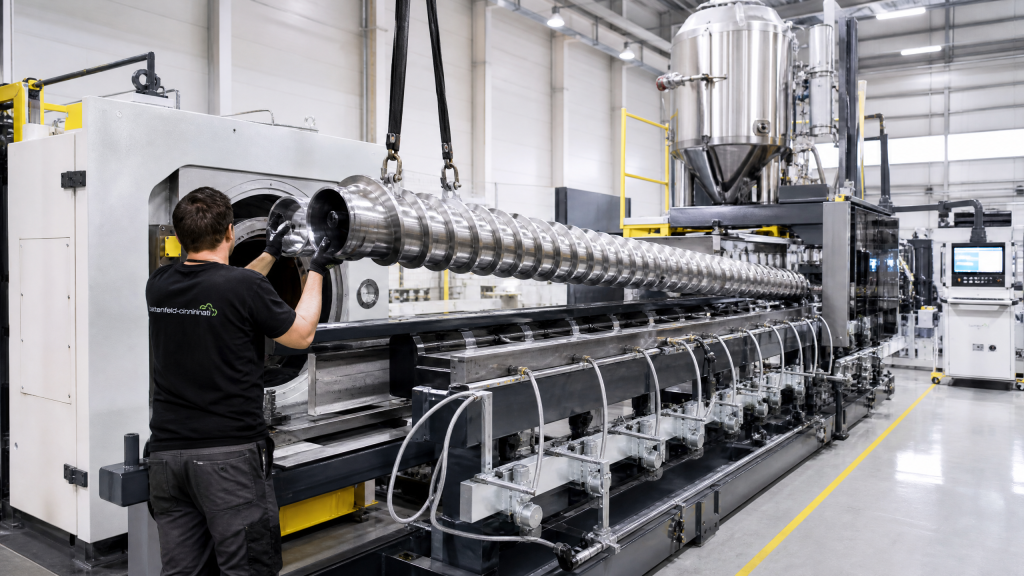
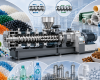
A modern industrial extrusion line where screw material selection is critical for productivity.
Upon switching to a tungsten carbide-coated screw, the manufacturer observes a dramatic improvement. The new screw maintains optimal performance for 24 months, an eight-fold increase in lifespan . Although the initial cost of the tungsten carbide screw was higher (e.g., 2-4 times that of nitrided steel), the extended lifespan and reduced downtime result in a significantly lower total cost of ownership (TCO) and a higher return on investment (ROI) over the long term. This case highlights that while nitrided steel has a lower upfront cost, it may not be the most economical choice for demanding applications when considering the full operational lifecycle.
Nitrided steel extruder screws remain a cornerstone in the plastics processing industry, offering a compelling balance of cost-effectiveness, toughness, and versatility for general-purpose, non-abrasive polymer applications. Their ease of manufacturing and repair further solidifies their position as a go-to choice for many operations.
However, for applications involving highly abrasive or corrosive materials, the limitations of nitrided steel become apparent. In such demanding environments, the superior wear and corrosion resistance of tungsten carbide screws, despite their higher initial cost and brittleness, often translates to greater long-term economic benefits through extended lifespan and reduced downtime. The optimal selection hinges on a thorough understanding of the specific material being processed, the desired product quality, and a comprehensive evaluation of both initial investment and long-term operational costs.