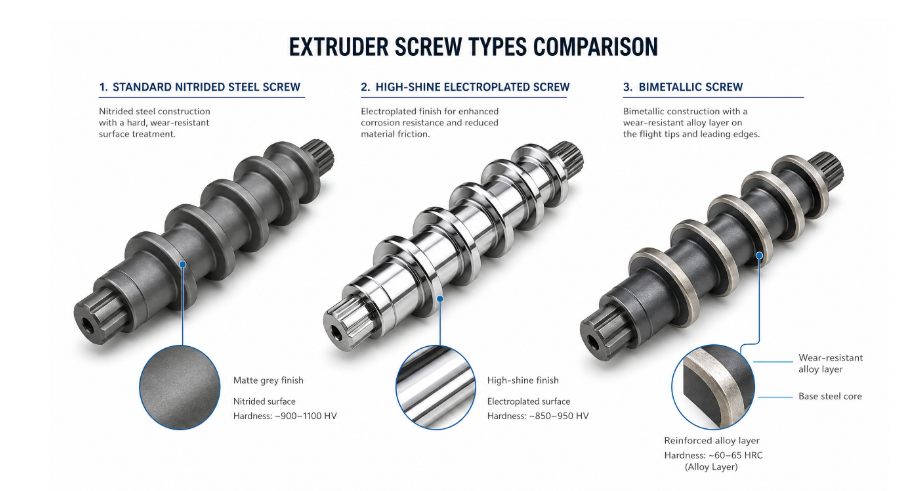
In the plastics processing industry, the extruder screw is a critical component whose material selection and performance directly dictate production efficiency, product quality, and even equipment lifespan. Faced with an increasingly diverse range of plastic materials and complex processing demands, the scientific selection of screw materials and optimization of their performance have become pivotal for enterprises seeking to enhance their competitiveness. This article delves into the commonly used materials for extruder screws, their performance characteristics, and offers strategies for performance optimization, aiming to provide readers with a deeper understanding and practical application of screw technology.
I. Common Extruder Screw Materials and Their Characteristics
The selection of extruder screw materials necessitates a comprehensive consideration of factors such as wear resistance, corrosion resistance, strength, and toughness. Below are several common screw materials and their distinctive features:
1. 38CrMoAlA (Nitrided Steel)
38CrMoAlA is a widely utilized alloy structural steel. Following nitriding treatment, a high-hardness nitrided layer forms on its surface, significantly enhancing its wear resistance and fatigue strength. This material offers excellent comprehensive mechanical properties and cost-effectiveness, making it extensively applied in processing common plastics such as PP, ABS, PS, AS, and PVC .
2. SKD61 (Hot Work Tool Steel)
SKD61 is a premium hot work tool steel renowned for its exceptional toughness, thermal fatigue resistance, and high-temperature strength. While its initial hardness may not match that of nitrided steel, specific heat treatments enable it to achieve superior overall performance, particularly in applications demanding high toughness and torsional strength .
3. Bimetallic Alloy Screws
Bimetallic screws typically use 38CrMoAlA or SACM645 as a base material. Through specialized processes like ion spray welding or centrifugal casting, a high-hardness, highly wear-resistant, or highly corrosion-resistant alloy layer (e.g., tungsten carbide-nickel based alloy) is fused onto the screw’s working surface (such as the flight tips or root). This composite structure combines the excellent toughness of the base material with the superior surface properties of the alloy layer, allowing it to perform exceptionally well when processing highly filled, highly corrosive, or high-temperature plastics, including glass fiber-reinforced PA6, PA66 engineering plastics, and special high-temperature, high-corrosion plastics like LCP, PPS, PES, and PPA .
4. Stainless Steel Screws
Certain special stainless steels (e.g., 9Cr18MoV), after integral quenching and hardening, exhibit good corrosion resistance, making them suitable for processing some highly corrosive plastics .
5. Electroplated Screws
Electroplating a layer of hard chrome, nickel, or titanium onto a 38CrMoAlA or SACM645 base material can enhance the screw’s surface hardness and corrosion resistance. This makes them suitable for processing transparent materials like PC, PMMA, PET, and corrosive plastics such as U-PVC .
II. Performance Comparison of Extruder Screw Materials
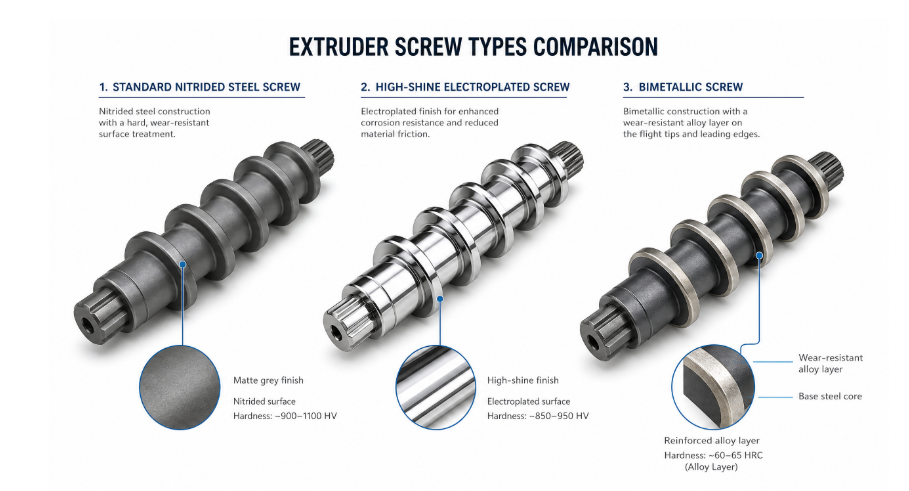
To provide a clearer understanding of the characteristics of different materials, the table below compares the performance of several common extruder screw materials:
| Material Type | Base Material | Surface Treatment/Alloy Layer | Typical Hardness (HRC/HV) | Key Characteristics | Applicable Plastic Types | Advantages | Disadvantages |
| Nitrided Steel Screw | 38CrMoAlA | Nitriding Treatment | HV980~1080° | High surface hardness, good wear resistance, cost-effective | Common plastics like PP, ABS, PS, AS, PVC | Economical, good overall performance | Moderate corrosion and high-temperature resistance |
| SKD61 Screw | SKD61 | Special Heat Treatment | Approx. HRC55° | Good toughness, high torsional strength, thermal fatigue resistance | Applications requiring high toughness | Suitable for high-strength, high-toughness demands | Inferior wear and corrosion resistance compared to bimetallic |
| Bimetallic Screw | 38CrMoAlA/SACM645 | Tungsten carbide-nickel based alloy spray welding/casting | Approx. HRC60° | Excellent wear and corrosion resistance, superior high-temperature performance | Highly filled, highly corrosive, high-temperature plastics (PA+GF, LCP, PPS) | Long lifespan, wide application range, stable performance | Higher cost, complex manufacturing process |
| Electroplated Screw | 38CrMoAlA/SACM645 | Hard Chrome/Nickel/Titanium Electroplating | Approx. HRC60° | High surface hardness, good corrosion resistance | Transparent plastics (PC, PMMA, PET), U-PVC corrosive plastics | High surface finish, corrosion resistant | Electroplating layer may peel off, affecting lifespan |
| Stainless Steel Screw | 9Cr18MoV | Integral Quenching + Hardening | Approx. HRC55° | Good corrosion resistance | Corrosive plastics | Outstanding corrosion resistance | Relatively weaker overall wear resistance |
III. Strategies for Extruder Screw Performance Optimization
Optimizing screw performance extends beyond material selection to encompass design, manufacturing processes, and routine maintenance. Here are several key optimization strategies:
1. Optimized Screw Geometry Design
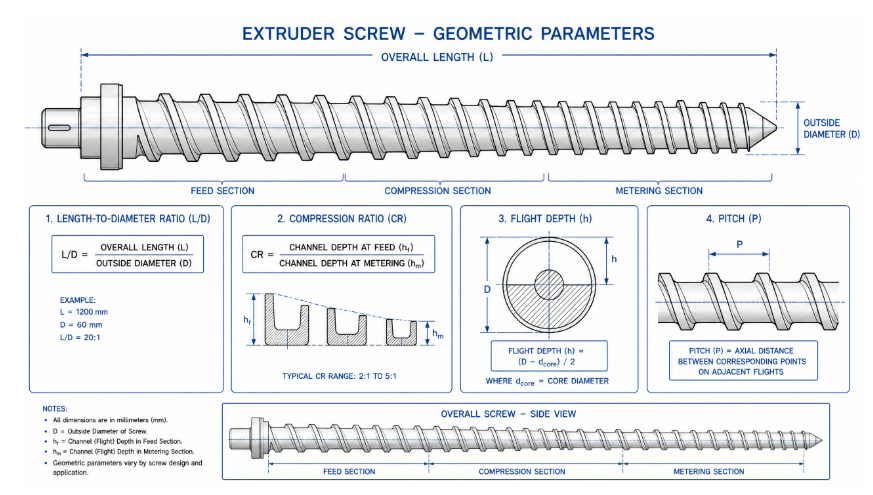
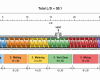
The geometric parameters of the screw, such as Length-to-Diameter ratio (L/D), compression ratio, flight depth, and pitch, are crucial for plasticizing quality and efficiency .
•Length-to-Diameter Ratio (L/D): A larger L/D ratio means longer residence time for the material in the screw, facilitating thorough plasticization and mixing. However, an excessively large L/D can increase torque transmission and energy consumption. The appropriate L/D ratio must be selected for different materials; for instance, crystalline plastics (POM, PA) typically require a longer feeding section, while heat-sensitive plastics (PVC) need a shorter one to prevent thermal degradation .
•Compression Ratio: A well-designed compression ratio ensures sufficient melting, mixing, and degassing of the material in the compression section. An overly high compression ratio can lead to excessive shear heat and material degradation; too low, and plasticization may be incomplete .
•Mixing Elements: For high-viscosity, highly filled, or materials requiring uniform dispersion, specialized mixing elements (e.g., pins, shear rings) can be designed to enhance mixing efficiency, reduce shear heat, thereby lowering energy consumption and improving product quality .
2. Advanced Surface Treatment Technologies
Beyond base material selection, surface treatment technologies are vital for enhancing screw performance:
•Nitriding Treatment: Through the nitriding process, an extremely hard nitrided layer is formed on the screw surface, significantly improving wear and corrosion resistance .
•Bimetallic Spray Welding/Casting: Fusing wear-resistant and corrosion-resistant alloys, such as tungsten carbide or nickel-based alloys, onto the screw’s working surface can substantially extend screw life, particularly for processing glass fiber-reinforced, mineral-filled, or highly corrosive materials .
•Hard Chrome Electroplating: Provides high hardness, a low coefficient of friction, and good corrosion resistance, suitable for processing transparent plastics and U-PVC .
3. Precision Manufacturing and Quality Control
The manufacturing precision of the screw directly impacts its performance and lifespan. Utilizing high-precision CNC machining equipment to ensure the straightness, surface roughness, and accurate dimensions of each screw section can reduce friction, lower energy consumption, and guarantee stable product quality . A stringent quality inspection system, including hardness testing, metallographic analysis, and ultrasonic flaw detection, is crucial for ensuring screw quality.
4. Scientific Maintenance and Care
Proper maintenance and care are essential for extending screw life and preserving its excellent performance .
•Regular Cleaning: Promptly clean residual materials from the screw and barrel after each shutdown to prevent carbonization and corrosion .
•Temperature Control: Strictly control the temperature of each barrel section to avoid damage to the screw and material from excessively high or low temperatures .
•Wear Monitoring: Regularly inspect the screw for wear, especially in the feeding and metering sections, to promptly identify and address wear, preventing issues like poor plasticization and reduced output .
•Avoid Idling and Foreign Objects: Prevent the screw from idling or foreign objects like metal debris from entering the barrel, which can lead to severe screw damage .
IV. Case Study: Application of Bimetallic Screws in Glass Fiber Reinforced Material Processing
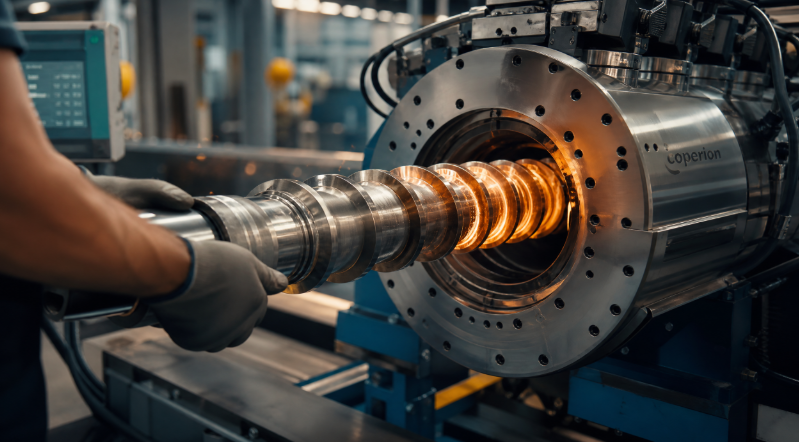
A leading automotive parts manufacturer encountered a challenge when processing glass fiber-reinforced PA66 material: traditional nitrided screws had a lifespan of only 3-6 months. Frequent screw replacements led to extensive downtime and high production costs. Following a technical evaluation, they opted for bimetallic screws with a tungsten carbide-nickel based alloy fused onto the working surface. After the upgrade, the screw lifespan significantly extended to 18-24 months, dramatically increasing equipment uptime and saving hundreds of thousands of RMB annually in maintenance and downtime costs. This case vividly demonstrates the critical importance of selecting high-performance screw materials tailored to specific processing needs .
Conclusion
The selection of extruder screw materials and performance optimization is a systematic endeavor, encompassing material science, mechanical design, manufacturing processes, and daily management. By thoroughly understanding the characteristics of different materials, aligning with actual processing demands, and implementing scientific optimization strategies, enterprises can not only effectively extend screw lifespan and reduce operating costs but also significantly enhance product quality and production efficiency, thereby gaining a competitive edge in the market. Engaging with professional screw customization service providers is a crucial step towards achieving these objectives.
V. Frequently Asked Questions (FAQs)
Q1: Why is material selection so crucial for extruder screws?
A1: The material of an extruder screw directly impacts its wear resistance, corrosion resistance, strength, and toughness. These properties are critical for maintaining production efficiency, ensuring product quality, and extending the lifespan of the equipment, especially when processing diverse and demanding plastic materials.
Q2: What are the main advantages of bimetallic screws over nitrided steel screws?
A2: Bimetallic screws offer superior wear and corrosion resistance due to their composite structure, which combines a tough base material with a high-hardness alloy layer. This makes them ideal for processing highly filled, highly corrosive, or high-temperature plastics, significantly extending their lifespan compared to traditional nitrided steel screws.
Q3: How does optimizing screw geometry design improve performance?
A3: Optimizing geometric parameters like the Length-to-Diameter (L/D) ratio, compression ratio, and mixing elements ensures efficient plasticization, thorough mixing, and proper degassing of materials. This leads to improved product quality, reduced energy consumption, and prevents issues like material degradation or incomplete plasticization.
Q4: What role does surface treatment play in screw optimization?
A4: Advanced surface treatments such as nitriding, bimetallic spray welding/casting, and hard chrome electroplating enhance the screw’s surface hardness, wear resistance, and corrosion resistance. These treatments are vital for protecting the screw from abrasive and corrosive materials, thereby extending its operational life and maintaining performance.
Q5: What are the key maintenance practices for extruder screws?
A5: Essential maintenance practices include regular cleaning to prevent carbonization and corrosion, strict temperature control of the barrel sections, continuous monitoring for wear, and preventing the screw from idling or foreign objects from entering the barrel. Adhering to these practices can significantly prolong screw lifespan and ensure consistent performance.