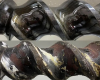
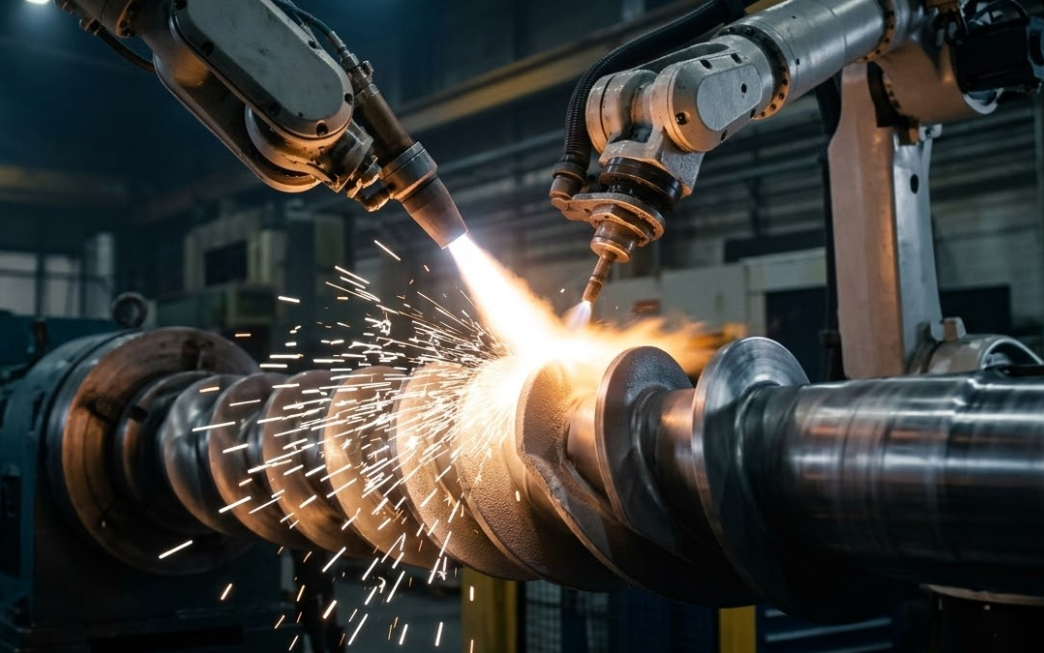
On the plant floor of any plastics or rubber processing facility, the most dreaded scenario for a production manager is an unexplained drop in throughput. More often than not, the root cause is flight wear on the extruder screw.
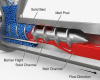
The screw and barrel act as the heart of the extrusion process. When processing compounds containing abrasive fillers like glass fiber (GF) and calcium carbonate, or corrosive materials like PVC, standard screws can fail within months. Frequent teardowns waste labor, and the resulting melt leakage (backflow) can quietly consume over 15% more electrical energy due to lost efficiency. From a practical engineering standpoint, the solution lies in extruder screw customization, specifically focusing on strategic upgrades to base materials and surface treatments.
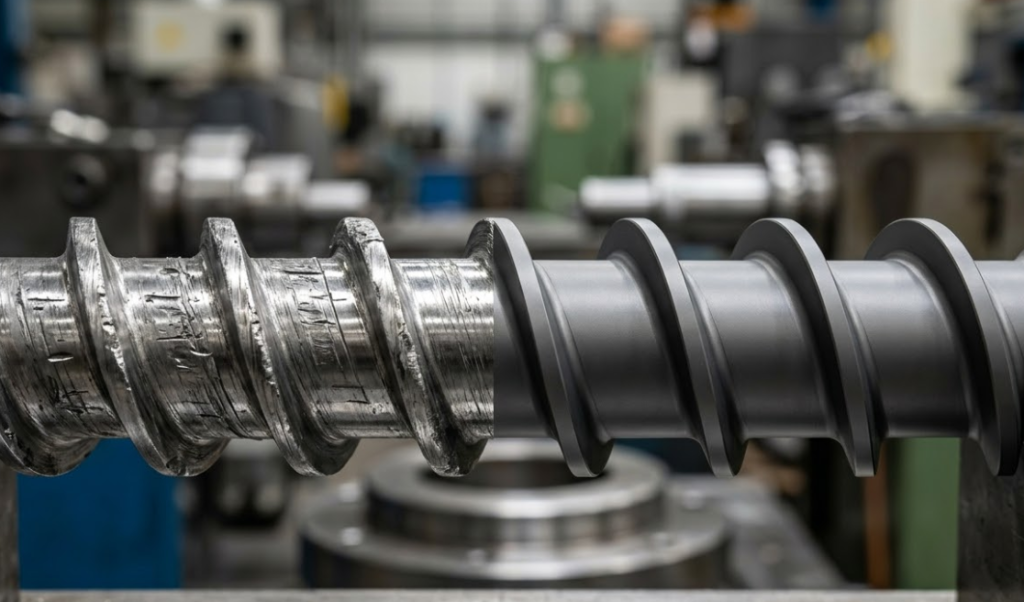
- 1. The Foundation of Extruder Screw Customization: Evaluating Core Base Materials
In mechanical design, the substrate dictates the structural integrity of the component. Selecting the right base material for a highly wear-resistant extruder screw requires balancing hardness (for abrasion resistance) with toughness (to prevent torsional shearing). The table below outlines the exact metallurgical specifications of mainstream industrial options:
Table 1: Technical Comparison of Extruder Screw Base Materials
| Base Material | Rockwell Hardness (HRC) | Abrasion Resistance | Corrosion Resistance | Relative Cost Ratio | Optimal Production Scenario |
| 38CrMoAlA (Nitrided) | 55-58 (Surface only) | ⭐⭐ | ⭐⭐ | 1.0 (Baseline) | Standard pure resins (PE/PP), non-corrosive, unfilled extrusion. |
| SKD61 (Hot Work Tool Steel) | 58-62 (Through-hardened) | ⭐⭐⭐ | ⭐⭐⭐ | 1.8 – 2.2 | Compounds with minor additives requiring high overall torsional strength. |
| Bimetallic Alloy | 58-65 (Alloy layer) | ⭐⭐⭐⭐⭐ | ⭐⭐⭐⭐ | 3.5 – 4.5 | Highly abrasive environments, such as 30%+ glass fiber or carbon fiber reinforced plastics. |
| Hastelloy C-276 | 40-45 | ⭐⭐ | ⭐⭐⭐⭐⭐ | 8.0 – 10.0 | Highly corrosive fluoropolymers (e.g., Teflon) or severely degrading PVC. |
Running 30% glass-filled nylon on a baseline 38CrMoAlA nitrided screw is an engineering miscalculation that guarantees premature failure. For severe abrasive environments, upgrading to a bimetallic barrel and screw setup is the most mathematically sound long-term investment.
2. Screw Surface Treatment Processes: Engineering a Protective Armor
If the base material provides the structural backbone, the screw surface treatment process acts as the localized armor against extreme friction. The critical engineering metric here is adhesion strength; a highly hard coating is useless if it delaminates under the high shear stress of viscous melts.
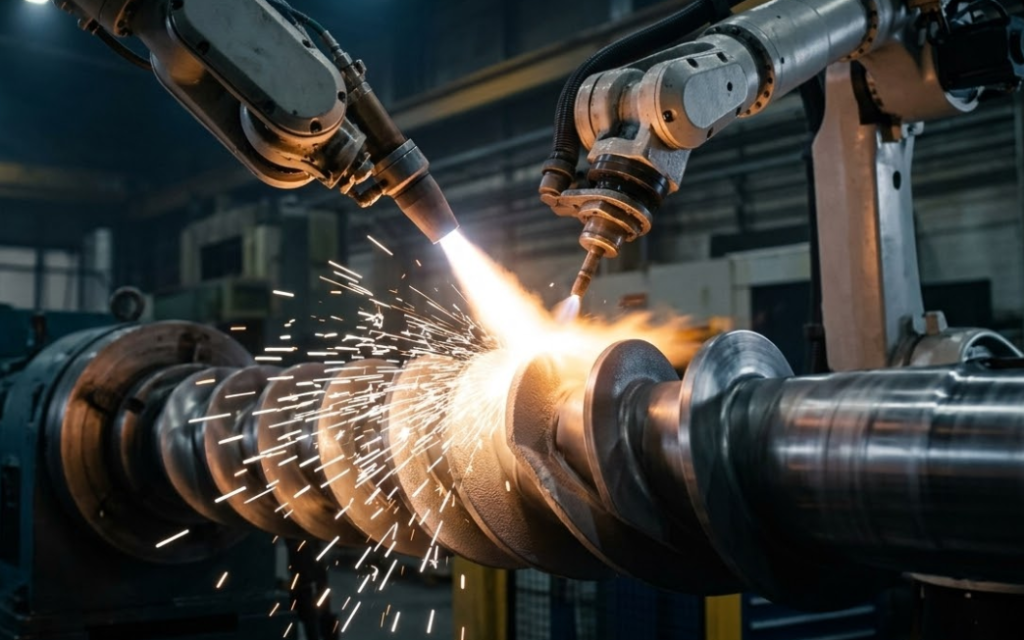
Let’s evaluate the empirical data of industry-standard coating technologies:
Table 2: Parameter Comparison of Screw Surface Hardfacing/Coatings
| Coating Process | Vickers Hardness (HV) | Thickness (mm) | Adhesion Mechanism | Engineering Pros & Cons |
| Gas Nitriding | 800 – 1000 | 0.3 – 0.6 | Metallurgical Diffusion | Pro: Low cost, minimal thermal distortion. Con: Thin layer; once breached, the soft core wears exponentially fast. |
| Hard Chrome Plating | 900 – 1100 | 0.03 – 0.08 | Mechanical Bond | Pro: Extremely low coefficient of friction, good chemical resistance. Con: Micro-cracks easily under impact from hard fillers; strict environmental regulations. |
| PTA Plasma Welding | 600 – 800 | 1.5 – 3.0 | Strong Metallurgical | Pro: Thickest protective layer, excellent for rebuilding worn flights. Con: Large heat-affected zone (HAZ) requires precise thermal management. |
| HVOF Tungsten Carbide | 1100 – 1300 | 0.1 – 0.3 | High-Strength Mechanical | Pro: The ultimate solution for maximum abrasion resistance against glass fibers. Con: High capital cost; not recommended for highly acidic (corrosive) environments. |
3. Field Data and ROI: Calculating the Value of Upgrades
According to polymer engineering benchmarks, every 0.1mm increase in the radial clearance between the screw and barrel results in a 5% to 10% drop in volumetric output. Operators attempting to compensate by increasing screw RPM will subsequently drive up motor amperage and energy consumption by over 15%.
Consider a field case study from an SPC (Stone Plastic Composite) flooring plant. The heavily calcium carbonate-loaded formulation acted as a grinding paste. Their standard nitrided screws were failing every 4 months. Each replacement incurred a $2,100 hardware cost, plus significant downtime losses.
When consulting with an extruder barrel and screw manufacturer, the engineering team implemented a custom solution: upgrading the base material to SKD61 and applying a PTA nickel-based alloy overlay strictly on the feed and compression zones. The initial procurement cost rose to $4,500 per screw.
The Engineering ROI: The upgraded screw operated continuously for 14 months before reaching the maximum allowable wear clearance.
Under the old system, 14 months of production would have required 3.5 screws (totaling $7,350 in hardware alone, excluding downtime). The single $4,500 investment yielded immediate OPEX reductions and stabilized product dimensional tolerances.
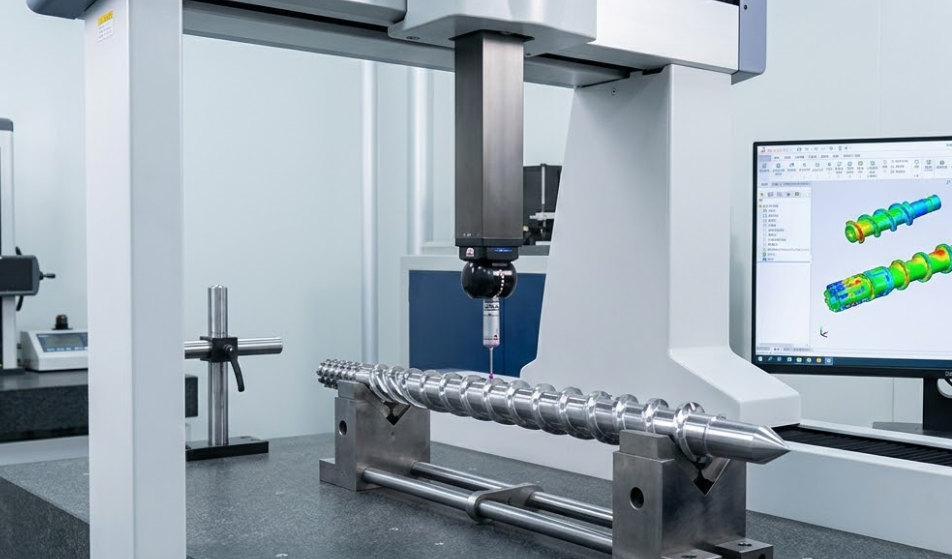
4. Conclusion: Specify, Don’t Settle
Process parameters—melt temperature, backpressure, and polymer rheology—are unique to every production line. Off-the-shelf components frequently result in suboptimal plasticization and premature wear. By leveraging proper data and collaborating on tailored metallurgy and hardfacing, plants can significantly extend continuous operational hours and improve overall equipment effectiveness (OEE).
Frequently Asked Questions (FAQ)
Q1: What is the typical lead time for custom extruder screw manufacturing?
A: Standard upgrades (like machining SKD61 to an existing print) take 15-20 days. Deep customization involving bimetallic casting, complex flight geometries, or HVOF tungsten carbide applications typically requires 30-45 days.
Q2: How do I determine if a worn screw should be rebuilt or scrapped?
A: Engineers use the “40% rule.” If the wear is isolated to the outer diameter of the flights, and the cost of PTA welding/rebuilding is less than 40% of a new screw, rebuilding is economically viable. However, if the root diameter is worn or fatigue micro-cracking is detected via NDT (Non-Destructive Testing), the screw must be scrapped to prevent catastrophic torsional failure.
Q3: How long will an HVOF Tungsten Carbide coating last processing 50% glass-filled polymers?
A: While a standard nitrided screw might fail in weeks under 50% GF loading, an HVOF tungsten carbide coating generally extends the lifespan by 3x to 5x, typically yielding 8 to 12 months of stable production, dependent on RPM and head pressure.
Q4: Can surface treatments be applied to any used screw?
A: No. If the used screw substrate has suffered yield deformation (bending) or contains previous platings that cannot be chemically stripped, applying high-heat treatments like PTA welding will induce stress fractures. A thorough ultrasonic or dye penetrant inspection is mandatory prior to rework.
Q5: Will upgrading to a bimetallic barrel and heavy-duty screw affect my PID temperature control zones?
A: Marginally. Bimetallic alloys and thick hardfacing layers generally possess a lower thermal conductivity than standard carbon steels. Upon installation, process engineers usually need to increase the barrel heater setpoints slightly (by 5-10°C) and monitor the melt pressure to recalibrate the thermal profile.