
The Hidden ROI of Your Extruder: A Data-Driven Guide to Component Selection
Let’s be honest: in modern manufacturing, you are constantly squeezed between increasing throughput demands and tightening quality standards. When an extruder goes down, or when scrap rates creep up, it’s rarely the entire machine that fails. It’s almost always an internal component—a screw, a barrel liner, or a die.
Too often, these critical components are treated as mere commodities—line items on a maintenance budget where the goal is to find the lowest price and fastest delivery. This approach is a mistake that bleeds profit.
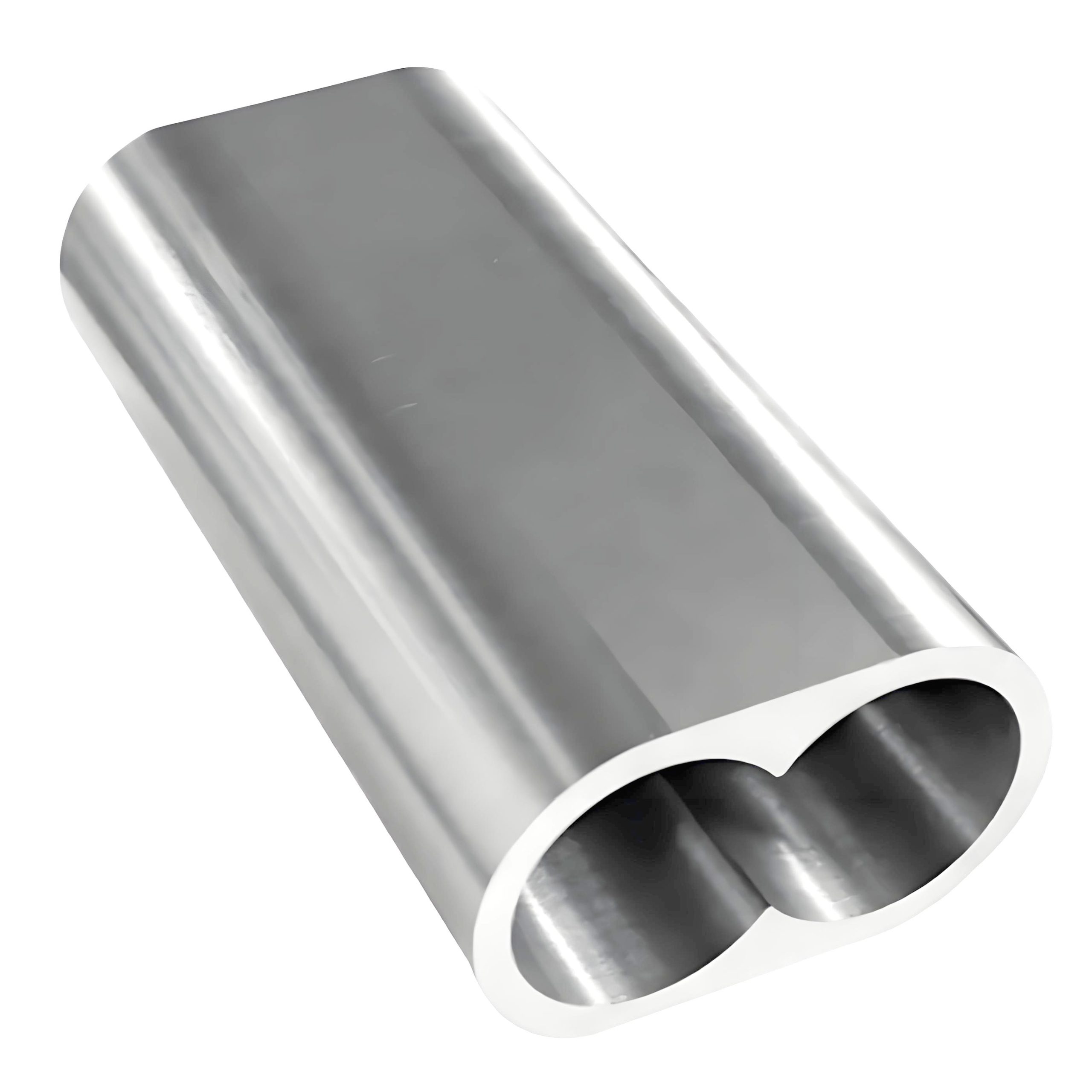
The internal organs of your extruder govern the efficiency at which raw materials become high-value products. Selecting these components demands more than flipping through a catalog; it requires a strategic approach based on metallurgy, precision engineering, and long-term economics.
This guide will move beyond the basics, using data comparisons and real-world scenarios to show you how to select components that maximize efficiency and secure your bottom line.
1. The Economics of Component Selection: Price vs. Total Cost of Ownership (TCO)
The biggest trap facing purchasing managers and maintenance leads is focusing on the “sticker price” of a replacement part rather than its Total Cost of Ownership (TCO).
A cheaper screw might save you $3,000 upfront. But if that screw wears out in six months instead of eighteen, and causes 20 hours of cumulative downtime for changeovers and process instability, those savings evaporate instantly. According to various manufacturing studies, the cost of unplanned downtime in plastics and processing industries can easily range from $5,000 to over $20,000 per hour when factoring in lost production, wasted material, and labor.
Let’s look at a hypothetical, conservative comparison over a 24-month period for a high-throughput line:
Table 1: The 24-Month Economic Reality (Hypothetical Data)
| Cost Factor | “Budget” Off-the-Shelf Screw | Premium Engineered Screw (Bimetallic) |
| Initial Purchase Price | $5,000 | $9,500 |
| Lifespan (estimated) | 8 Months | 24 Months |
| Replacements Needed (24 mo) | 3 | 1 |
| Total Hardware Cost | $15,000 | $9,500 |
| Estimated Downtime Cost | $30,000 (3 changeover events) | $10,000 (1 changeover event) |
| 24-Month Total Cost | $45,000 | $19,500 |
The Takeaway: The “expensive” part was actually 56% cheaper to own. High-quality parts are an investment in uptime, not a maintenance expense.
2. Material Science Deep Dive: Matching Metallurgy to the Mission
Your extruder is a brutal environment involving extreme heat, immense pressure, and often abrasive or corrosive feedstocks. Using generic materials here is a recipe for disaster. You must match the metallurgy to the primary threat.
The Threat: Abrasive Wear
If you are running fillers like glass fiber, calcium carbonate, or titanium dioxide, your components are essentially being sandblasted from the inside. Standard tool steels will wash out quickly.
- The Solution: You need high hardness. Look beyond standard nitriding. You require bimetallic liners or screws coated with tungsten carbide composites.
The Threat: Corrosion
Processing PVC, fluoropolymers, or certain flame retardants releases acids that pit and eat away at standard steel surfaces, ruining the surface finish and leading to material stagnation (burning).
- The Solution: You need specialized stainless steel alloys (like 440C or 17-4PH) or advanced nickel-based alloys (like Hastelloy or Inconel variants) that offer supreme chemical resistance.
Table 2: Comparative Material Hardness & Application
| Material / Treatment | Typical Hardness (Rockwell C – HRC) | Best Suited Application |
| Standard 4140 Steel (Heat Treated) | 28 – 32 HRC | Low impact, non-abrasive general polymers (PE, PP). |
| Nitrided Steel Surface | 60 – 65 HRC (Very thin layer) | Moderate use, low abrasion. Good surface lubricity. |
| Tool Steel (e.g., D2, CPM-9V) | 58 – 64 HRC (Thorough hardened) | High wear resistance, moderate toughness. |
| Tungsten Carbide Composite | 70+ HRC equivalent | Extreme abrasion (high glass loading). The gold standard for wear life. |
3. Precision Engineering: Why Microns Matter
You cannot just look at the material specs; you must look at the manufacturing tolerances.
The clearance between the screw flight and the barrel wall is critical. If the manufacturing is sloppy and the clearance is too large, material flows backward over the flights. This increases shear heat—potentially degrading sensitive polymers—and forces the motor to work harder to achieve the same output.
Achieving necessary tolerances often requires advanced manufacturing.
- CNC Machining and Grinding: Ensures precise screw profiles that match the theoretical design.
- High-Velocity Oxygen Fuel (HVOF) Coating: Applies ultra-hard coatings without overheating and warping the base metal of the screw.
If a supplier cannot provide detailed inspection reports verifying dimensional accuracy down to the micron, they are not providing high-performance parts.
4. A Tale of Two Factories (Comparison Case Study)
To illustrate the impact of these factors, consider two hypothetical plants, “Speed-Plast Inc.” and “Precision Polymers,” both extruding 30% glass-filled Nylon 66—a highly abrasive application. Both needed to replace a 90mm screw and barrel set.
The “Speed-Plast” Approach (Cost-Focused):
They bought the lowest bidder option: a standard nitrided screw and barrel based on the OEM drawing.
- Initial Savings: $6,000.
- Outcome: By month four, output dropped by 15% due to wear increasing the screw/barrel clearance. By month seven, the screw flights were so worn they lost the ability to effectively convey material, forcing an emergency shutdown during peak season.
The “Precision Polymers” Approach (Value-Focused):
They consulted with a specialized supplier. They chose a screw with customized flight geometry designed for glass fibers, manufactured from through-hardened tool steel with full tungsten carbide flight encapsulation, matched with a bimetallic barrel lined with a high-carbide alloy.
- Initial Premium: Paid 40% more than standard.
- Outcome: At month twelve, the extruder was still running at 98% of original output capacity. The barrel showed negligible wear. They avoided two replacement cycles and maintained consistent product quality throughout the year. Their ROI on the premium cost was realized in just five months of added production.
5. Vetting Your Supplier: Finding a Partner, Not Just a Vendor
The final variable in the efficiency equation is who you buy from. A catalog vendor just sells metal. A true partner sells process expertise.
How do you spot the difference?
- They Ask “Why”: They don’t just ask for the part number; they ask about your resin, your temperatures, your screw speeds, and your current failure modes.
- Engineering Capabilities: Can they perform flow simulations to optimize screw geometry for your specific material? Can they analyze a worn part to determine exactly why it failed?
- Verifiable Quality Control: Do not just accept “we are ISO certified.” Ask how they verify the hardness of their carbide coatings or the concentricity of their barrels.
Conclusion and Your Action Plan
Maximizing extruder efficiency isn’t about finding a magic bullet; it’s about the disciplined application of engineering principles to component selection. It’s about realizing that the cheapest part is usually the most expensive one to own.
Before your next purchase, run through this quick checklist:
- Define the Primary Threat: Is it abrasion, corrosion, or both? Be specific about fillers and chemical composition.
- Calculate the TCO: Estimate the cost of downtime for a replacement. Use that figure to justify higher-quality materials.
- Demand Data: Ask for material certifications and hardness specs (e.g., “I need at least 60 HRC depth of 1mm”).
- Audit the Precision: Ask how the supplier verifies screw-to-barrel clearance tolerances.
- Consult, Don’t Just Order: Engage supplier engineers to review if a custom geometry could improve your specific process.
Stop treating your extruder parts as commodities. Start treating them as the critical profit drivers they are.